A red face on a walk or workout is usually skin blood flow dumping heat, not a blood-pressure emergency. Pain, hives, or fainting are the different story.
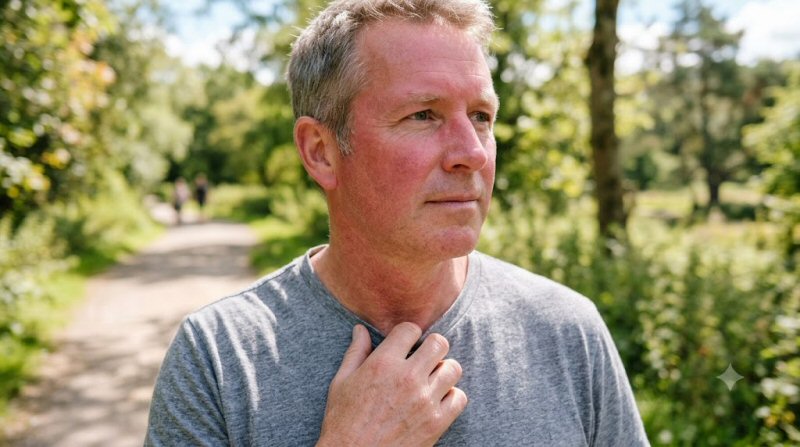
You stop at the corner and catch yourself in a shop window. Cheeks bright, ears pink, neck blotched, as if you had been embarrassed rather than walking. Nobody else on the path looks quite that painted. The color can linger for ten or twenty minutes after the effort ends, then fade while you are standing still in the kitchen. It feels like a signal you did not mean to send. Most of the time it is a radiator doing its job on a face that shows the work.
The face is a small surface with a large blood supply. When working muscle heats the blood, skin vessels open so heat can leave. Fair skin, a cool morning, and a still desk day make that opening look dramatic. The flush is usually circulation, not a rash and not a blood-pressure crisis.
What This Flush Feels Like
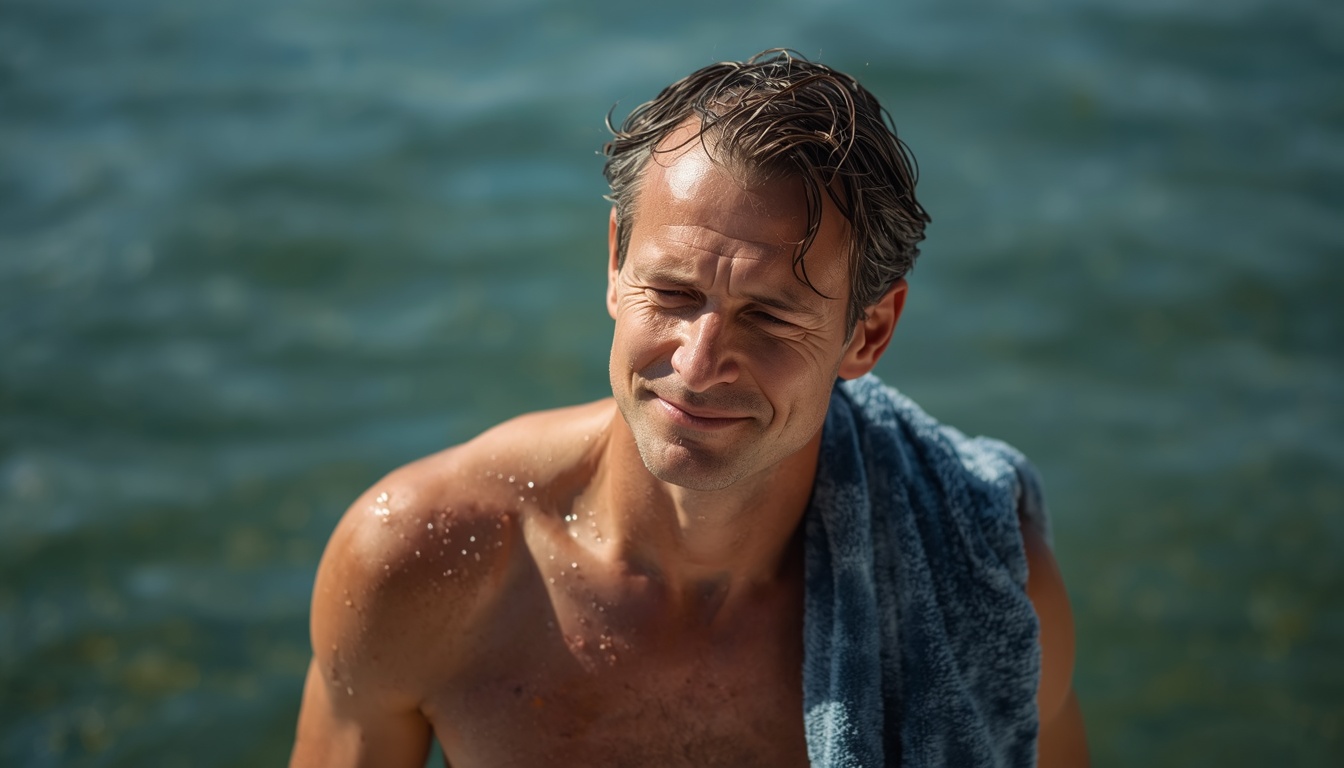
The color often starts on the cheeks and the bridge of the nose, then the ears, the chin, and the sides of the neck. Skin feels warm to your own hand. There may be a light sheen of sweat, or almost none if the air is dry and moving. Some people get a map-like pattern, paler around the mouth and redder over the cheekbones. Others look evenly sunburned for a short while, with no sun involved.
It tends to arrive a few minutes into a brisk walk, a hill, a gym set, or carrying bags up stairs, and it peaks as you stop. Stopping does not shut the vessels instantly. John M. Johnson and colleagues showed that skin blood flow can stay high in early recovery while heat is still leaving. That is why the face can look reddest in the lobby, not on the treadmill.
What it usually does not feel like is itch, welts, or a tight swelling of the lips. Those belong to a different reflex. A social blush, the kind that hits when you are watched, is also real and also facial, but it is faster, tied to being seen, and covered in why your face still flushes when you feel seen. Exercise red is tied to effort and heat.
Why the Face Goes Red
Working muscle is inefficient on purpose. Most of the energy in a step becomes heat, not motion. Blood carries that heat to the skin. Loring Rowell mapped how much of the cardiac output can shift toward skin once body temperature rises. The face is a favored exit. It has a dense net of vessels, sits in moving air, and is hard to cover. Ears do the same job on a smaller scale.
The opening is not only a passive stretch of warm pipes. Dean Kellogg Jr. and Nisha Charkoudian described active cutaneous vasodilation: sympathetic nerves that were built for sweating also release a signal that widens skin vessels, with nitric oxide helping the later, stronger phase. W. Larry Kenney’s group showed that this skin response is trainable and that it dulls a little with age, which is why a flushed face at 25 and a flushed face at 55 are not quite the same picture. Both can still be ordinary.
Fair skin shows the same flow as deeper skin. It just advertises it. Cold outdoor air can make the contrast sharper, because the cheeks were pale a minute earlier. A warm room does the opposite: the flush starts sooner, because you were already a little vasodilated. The sweat system that rarely gets used is the partner here. Sweat cools the skin that the extra blood has warmed. A red face with almost no sweat, in very dry air, can still be normal. A red face that never sweats, in thick heat, is a poorer cooling plan.
Common Reasons It Looks Worse Some Days
A desk morning followed by a fast walk is a classic setup. Skin vessels have been quiet in cool indoor air. The first real heat load opens them all at once. Hills, stairs, and carrying a child or a laptop bag raise the load without looking like “exercise” to anyone else.
Spicy food before a walk, a hot drink, or alcohol the night before can prime the same vessels. Alcohol flush is a separate chemistry, clearest in people with a slow aldehyde step, and it is covered in is it normal for your face to flush after one drink. Exercise on top of that drink makes the color louder.
Dehydration makes the face look redder relative to how you feel, because sweat is scarce and the skin stays warm. A tight collar or a scarf traps heat at the neck and paints the jawline. Hormonal shifts, including the years around menopause, can add flushes that exercise then exaggerates. Rosacea-prone skin does the same: the vessels are already reactive, so a jog writes in brighter ink. Jonathan Wilkin’s work on flushing separated these triggers. Heat and exertion sit on the ordinary list. A new pattern of burning redness that stays for hours is the one to mention to a clinician.
Less Common but Serious
Most exercise redness fades as you cool. A few companions are not ordinary heat loss.
Chest pressure, pain into the arm or jaw, sudden breathlessness out of proportion to the hill, or fainting are not “just a red face.” Stop and get help. A pounding headache that arrives at peak effort needs the same respect as any exertional headache, discussed in is it normal to get a headache after exercise.
Hives, lip or tongue swelling, wheeze, or a flush with dizziness during a workout can be exercise-related allergy or anaphylaxis, sometimes tied to a food eaten in the hours before. That is an emergency pattern, not a glow.
A flush with watery diarrhea, wheeze, and a racing heart, unrelated to how hard you worked, is rare and worth a medical look. So is redness with one-sided facial droop, a new severe headache, or confusion. A face that stays deep red and hot at rest, with a new persistent headache or vision change, is also not post-walk color.
Hidden Triggers
Indoor heat plus still air. A gym with poor ventilation raises skin blood flow before the muscles have done much. Outdoor cold then a warm lobby does the rebound version: pale outside, florid inside.
Niacin, some blood-pressure pills, and nitrates widen skin vessels and make a mild walk look scarlet. If the color started with a new medicine, that timing matters more than the workout.
Caffeine and a hard effort together raise the sense of heat even when the flush is still benign. A wool layer over a synthetic shirt traps the sweat that should be evaporating, so the face does the cooling the trunk cannot.
Looking down at a phone on the walk does not cause the flush, but a tucked chin and a tight scarf do keep heat against the neck. A level gaze and an open collar are small, useful changes.
When to Worry
Worry less if the redness tracks effort, feels warm but not painful, and fades over several minutes to half an hour of easy cooling. Worry more if it comes with chest pain, fainting, wheeze, hives, swelling of the mouth, a one-sided weak face, a sudden severe headache, or confusion. Worry also if the color has become a daily burning redness that no longer needs a walk to appear, or if you have stopped sweating in the heat while the face stays hot.
One brighter cheek than the other, if it always matches how you were facing the wind or the sun, is usually nothing. A new fixed patch, a wound that will not heal, or a flush with fever is a clinic question, not a cooldown question.
Myths vs Facts
Myth: A red face means your blood pressure is dangerously high. Fact: Skin redness is local blood flow and heat, not a cuff reading. Pressure can be ordinary while the cheeks look painted. Measuring once, at rest, tells you more than the mirror.
Myth: If you were fitter you would not flush. Fact: Fit people often flush earlier and shed heat well. The untrained pattern is sometimes a later, patchier red with more strain. Kenney and Johnson both treated a strong skin blood-flow response as a working cooler, not a flaw.
Myth: You should stop every time your face goes red. Fact: Stop for pain, faintness, wheeze, or a headache that explodes. Color alone, in a person who otherwise feels like they are exercising, is the radiator.
Myth: Cold air means you cannot overheat. Fact: Muscle still makes heat in winter. A red face on a cold walk is common, especially with a hat and a zipped collar trapping the neck.
How to Manage It
Let the flush finish its job. A few minutes of easy walking cools you better than an abrupt stop in a hot room. Open the collar. Take the hat off once you are out of strong sun. Step into moving air rather than a sealed car.
Drink enough that sweat can happen. A pale, scant urine by late morning is a rough clue you are not far behind. On spicy or alcohol days, expect a louder face and plan a slower start.
If rosacea is the amplifier, a clinician can talk about triggers and treatment. Daily harsh scrubs and very hot water after the workout make reactive skin angrier. A lukewarm rinse is enough.
Build the heat load gradually if you have been still for weeks. The vessels and the sweat glands both adapt. Short outdoor walks do more for that adaptation than one heroic session in a warm gym. The same contrast the circulation still expects is useful here: a cool start, a real effort, a real cooldown.
When to See a Doctor
Make a routine appointment if the flush is new, burning, and lasting for hours, if it arrives with almost no effort, or if medicines or midlife hormone shifts seem to have changed the pattern. Seek urgent care for chest pain, collapse, breathing trouble, swelling of the mouth, widespread hives, a sudden severe headache, or a face that has become weak on one side. Bring the timing: what you ate, what you took, how hard you worked, and how long the color stayed.
FAQs
Why is my face redder than my running partner’s?
Skin tone, baseline vessel reactivity, and how much heat you are storing all change the picture. The same skin blood flow is simply easier to see on fair skin. Rosacea, a recent drink, or a tighter collar can widen the gap without meaning you are less fit.
Does a red face mean I am overdoing it?
Not by itself. Effort, breath, and whether you can talk are better guides. A red face you can still speak through is usually heat loss. A red face with chest pain, dizziness, or a sudden headache is a reason to stop.
Why does the color get worse after I stop?
Skin vessels stay open while heat is still leaving, and you are no longer generating airflow by moving. Johnson’s recovery measurements match what the shop window shows. Easy walking and an open collar shorten that tail.
Can I prevent it?
You can turn the volume down, not always off. Cooler air, a looser collar, a gradual start, and enough fluid help. Avoiding a personal trigger such as alcohol, very spicy food, or a too-hot gym helps more than any cream applied before you leave.
Is exercise flush the same as blushing?
No. Blushing is a fast emotional surge in facial vessels. Exercise flush builds with heat and effort and outlasts the stop. They can stack if you feel watched while you are already warm. The emotional version fades quicker once the attention does.
Should I worry if only my ears go red?
Ears are small radiators with little insulation. Red ears on a walk are common, especially in cold air. Painful, persistently swollen ears, or redness with fever, are the versions to mention. Simple post-walk pink is not.
Conclusion
A red face after a walk or a workout is usually the skin circulation you cannot see on the thigh, made obvious on the cheek. Heat has to leave. The face is a convenient door. Color that tracks effort and fades as you cool is the system working. Color with pain, faintness, wheeze, swelling, or a neurologic change is not a glow to walk off. For everyone else, an open collar and a few easy minutes are the treatment the radiator was waiting for.