
Nighttime itch is often circadian — a leakier skin barrier, warmer skin, a cortisol dip, and a quiet room — not proof you developed a new allergy after dark. Why pruritus peaks in bed, what Yosipovitch and Patel mapped, and when nocturnal itching needs a look.
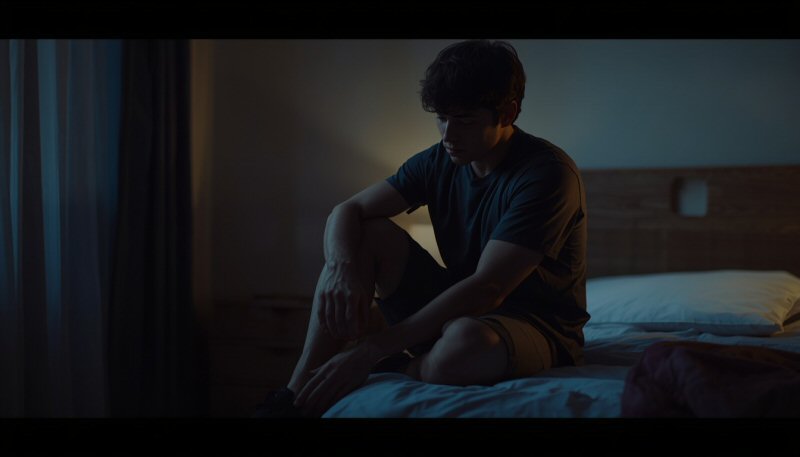
You were fine at dinner. You were fine on the sofa. Then the lights go down, the room goes quiet, and a map of tiny itches appears — ankles, shins, the crease of an elbow, a patch between the shoulder blades you cannot quite reach. You scratch. It blooms. Twenty minutes later you are rearranging the sheet as if the fabric itself were the problem.
This pattern has a name: nocturnal pruritus. It is not a separate disease that only exists after 10 p.m. It is the same skin, the same nerves, and a set of daily rhythms that tilt the system toward itch when you are trying to sleep. Gil Yosipovitch, Tejesh Patel, and Yozo Ishiuji reviewed the problem in Acta Dermato-Venereologica and made a point that still gets missed in casual advice: awareness in a quiet room is real, but it is not the whole story. Barrier leak, skin temperature, cortisol, and itch mediators all change on a clock.
What This Symptom Feels Like
People who have ordinary nighttime itch describe a recognizable cluster:
- Itch that is mild or absent during a busy day and becomes obvious once you lie still.
- Dry, tight, or warm skin rather than a sudden hive field — unless you already have urticaria or eczema.
- Favorite sites: lower legs, ankles, arms, waistband line, and the upper back.
- A scratch that feels briefly useful and then worse — the classic itch–scratch loop.
- Better after a cool room, a thick bland moisturizer, or simply morning, when the chemistry shifts again.
That last point matters. If the itch vanishes with daylight and a shower, the overnight physiology is a stronger suspect than a new allergen that only lives in your bedroom.
Common Causes
Most bedtime itch is a stack, not a single villain.
A barrier that leaks more after dark. Transepidermal water loss — TEWL, the standard measure of how well the stratum corneum holds water — rises in the evening and is lowest in the morning. Patel, Ishiuji, and Yosipovitch highlighted that higher nocturnal TEWL means a less competent barrier at the exact hour you undress and lie under covers. Irritants and pruritogens get a slightly easier path to the nerve endings that live just under that thin lipid seal.
Warmer skin on purpose. As you enter non-REM sleep, the hypothalamic set point for core temperature drops. Heat leaves through the skin. Cutaneous blood flow rises. Skin temperature can climb on the order of a degree Celsius. Yosipovitch has noted that this modest warming is enough to make peripheral itch fibers noisier. Heat does not have to reach a burn to amplify itch; it only has to change the local milieu around C-fiber endings that already carry pruritus.
Cortisol at its trough. Adrenal cortisol follows a strong circadian curve: lowest in the late evening and around midnight, then climbing toward a morning peak. Cortisol is not “the itch hormone,” but it is an anti-inflammatory brake. When the brake is loosest, low-grade inflammation and the cytokines that ride with it — including itch-linked signals such as IL-31 in inflamed skin — have more room. The same evening trough is one reason nocturnal asthma and some inflammatory rashes also prefer the night.
Fewer competing signals. Itch is a perception. During the day, movement, conversation, and visual clutter compete for the same attentional bandwidth. In a dark room the itch has the stage. That is not imaginary. It is also not sufficient by itself — which is why people with a sound barrier and a cool bedroom often sleep through the same quiet.
Dry indoor air and hot showers. Heated bedrooms and long evening showers strip lipids from the outer skin. The barrier you take to bed is then asked to perform at its weakest hour. This is the same winter-dryness logic described in work on how skin still expects outdoor weather and humidity rather than sealed, heated air.
Why This Happens: The Night Shift in Skin
Itch is not a weak version of pain. It has its own peripheral fibers, its own spinal circuits, and its own habit of recruiting scratching. Histamine is only one key. Many everyday itches — dry skin, eczema flares, the crawl after a warm duvet — run through histamine-independent pathways as well: protease-activated receptors, IL-31 receptors, and ion channels such as TRPV1 that also answer to heat.
At night several of those inputs rise together:
- The barrier is leakier (higher TEWL).
- Skin is a little warmer and better perfused.
- Endogenous corticosteroid tone is lower.
- Some prostaglandins involved in barrier repair and itch modulation, including PGE2, sit higher on their own night curve. Patel and colleagues suggested that a disrupted prostaglandin rhythm could keep nocturnal itch going after the original scratch.
- Sympathetic tone falls with sleep onset. Descending pathways that normally damp itch are less active, so a small peripheral signal is more likely to be noticed.
Yosipovitch has spent years arguing that chronic itch should be taken as seriously as chronic pain for quality of life. Night is when that comparison becomes obvious. Scratching fragments sleep. Fragmented sleep raises next-day stress chemistry. Stress chemistry can worsen barrier function and lower the itch threshold. The loop does not require a dramatic diagnosis to ruin a week of nights.
People with atopic dermatitis feel this stack more than people with intact skin. In inflamed eczema, TEWL is already high; nocturnal leak on top of a cracked barrier is a larger step. IL-31 and other type-2 signals keep C-fibers sensitized. That is why “I only itch in bed” is a classic eczema history even when the daytime rash looks modest.
Hidden Triggers
Some amplifiers are easy to miss because they look like ordinary evening habits.
- Hot baths “to relax.” Heat plus surfactant is a reliable way to raise TEWL just before the barrier’s weakest window.
- Wool, fleece, and tight waistbands. Mechanical rub on warmed skin is a pruritogen of its own.
- Bedroom dryness. Forced-air heat and hotel air-conditioning both drop humidity. Dry stratum corneum itches; dry stratum corneum at 11 p.m. itches more.
- Fragrance in “calming” lotions. Menthol can briefly gate itch. Perfume, essential oils, and drying alcohols can undo that within an hour.
- House dust mite load in bedding. For people who are already atopic, the pillow is a nightly allergen chamber. The itch then has both a circadian and an antigenic reason to peak in bed.
- Opioid pain medicines, some blood-pressure drugs, and diuretics. These can lower the itch threshold or dry the skin. The timing still looks “nocturnal” because that is when you notice.
- Pregnancy and perimenopause. Hormonal shifts change skin lipids and blood flow. Night often unmasks the dryness.
Exercise-related itch is a different reflex — sweat, acetylcholine, and sometimes cholinergic urticaria — and it usually starts during or right after effort rather than two hours after lights-out. If your only itch is in bed, look at barrier and clock first, not the gym. For the workout pattern, see why some people itch after they exercise.
Less Common but Serious
Isolated, mild nocturnal itch on dry legs in winter is common. A few patterns should not be waved off as “just the night.”
- Itch without a rash that is severe, generalized, and new — especially in middle age or later — can be a clue to cholestasis, chronic kidney disease, iron deficiency, thyroid disease, or, less often, a blood disorder. Night predominance does not make those less likely; it is how many of them present.
- Itch that wakes you every night and leaves scratch marks on the back and shoulders may still be eczema or xerosis, but it also deserves a look for scabies if others in the house itch, or for neuropathic itch if the distribution follows a dermatome.
- Jaundice, dark urine, pale stools, or swelling with itch is liver or biliary until proven otherwise.
- Fever, night sweats, and lymph-node swelling with relentless itch need prompt medical review.
The point is not to catastrophize every ankle scratch. It is to treat “only at night” as a timing clue, not as automatic proof of harmlessness when the itch is new, fierce, or whole-body.
When to Worry
Get timely care if any of these are true:
- The itch is new, intense, and not explained by dry air or a known rash.
- You cannot sleep most nights despite moisturizer, cooler bedding, and a shorter shower.
- There is jaundice, unexplained weight loss, swollen glands, or a rash that looks infected.
- Only one patch itches and the skin there is numb, burning, or scarred from scratching — possible neuropathic itch.
- A child has widespread night itch plus poor growth, oozing, or fever.
Ordinary winter shin itch that eases with a cream and a humidifier can be managed at home first.
Myths vs Facts
Myth: You itch more at night only because you finally notice it.
Fact: Attention matters. TEWL, skin temperature, and cortisol still change on a clock even if you try not to think about your shins. Yosipovitch has been explicit that “you are just less busy” is an incomplete explanation.
Myth: Night itch means you are allergic to your detergent.
Fact: Detergent allergy exists, but most nocturnal itch is barrier-plus-circadian. A new product can be a trigger. It is not the default.
Myth: If antihistamines help you sleep, the itch must be histamine.
Fact: First-generation antihistamines are sedating. Sleep can reduce scratching even when the itch pathway is only partly histamine. That is why they sometimes “work” for dry-skin night itch without proving an allergy.
Myth: Scratching “gets it out of your system.”
Fact: Scratching injures the already leaky night barrier, releases more local mediators, and trains the spinal cord to stay interested. Short-term relief, longer-term fuel.
Myth: Only people with eczema itch at night.
Fact: Eczema makes it worse. Dry skin, pregnancy, aging skin, and a hot duvet can do it on their own.
How to Manage It
Treat the night as a specific environment, not a moral failing of willpower.
Moisturize at the right minute. Apply a thick, bland emollient within three minutes of a short lukewarm shower so water is trapped under lipid. Yosipovitch and Jeffrey Bernhard have long treated emollients as first-line for chronic itch precisely because they repair the barrier that TEWL exposes at night. Skip fragrance. Ointment or cream beats a watery lotion on shins.
Cool the skin, not just the thermostat. A slightly cool bedroom, breathable cotton, and a lighter duvet lower the extra degree of skin warmth that makes C-fibers chatty. A cool pack on a raging patch can gate the signal the way heat inflames it.
Shorten and cool the evening wash. Hot water plus soap is a TEWL machine. If you need a shower, keep it brief, lukewarm, and limited to the parts that are actually dirty. Then seal.
Humidify the room you sleep in. Dry air and a leaky night barrier are partners. This is the indoor half of the larger story that your skin barrier still expects weather and outdoor humidity, not sealed winter heat.
Break the scratch without a lecture. Keep nails short. Wear light cotton sleeves if you gouge in your sleep. Menthol or a cold compress can occupy the same fibers for a few minutes while the emollient starts working.
Time the medicine if you use it. For known eczema, clinicians sometimes lean on evening dosing of anti-inflammatory treatment because that is when the endogenous steroid trough and the TEWL peak coincide — a small example of chronotherapy rather than a new drug class.
If the itch is actually restless legs — a deep crawl that is relieved by moving the limbs, not by scratching the skin — the circuit is different. That pattern is covered in why some people get restless legs at night.
When to See a Doctor
See a clinician if home barrier care fails for more than a couple of weeks, if the itch is generalized without much rash, or if you have other systemic symptoms. Bring a simple diary: time of onset, sites, showers, new products, and whether anything in the house itches too. That is more useful than a long list of suspected foods.
A dermatologist can sort xerosis from eczema, from scabies, from neuropathic itch. Primary care can check the small set of blood tests that matter when itch is whole-body and rash-poor. Neither visit is an overreaction if you have stopped sleeping.
FAQs
Is it normal for only my legs to itch at night?
Yes. The shins have fewer oil glands and take the brunt of dry air and friction from sheets. Nocturnal TEWL plus dry legs is one of the most common benign patterns, especially after middle age and in winter.
Why does a hot shower make bedtime itch worse later?
Heat and detergent raise water loss through the stratum corneum. You feel soothed in the steam. An hour later the barrier is thinner, the room is dry, and cortisol is falling. The itch arrives on schedule.
Do I need an allergy test if I only itch in bed?
Not as a first step. Start with moisturizer, cooler bedding, and a look at soaps and fabric. Test if there is a seasonal pattern, a rash that looks like eczema or hives, or a clear link to a new product. Night-only timing by itself is a clock-and-barrier clue.
Can stress really make night itch worse?
Yes. Stress can blunt healthy cortisol dynamics, disturb sleep, and lower the central threshold for itch. The skin still has to be dry or inflamed for the signal to start; stress turns up the gain.
Are sleeping pills a good fix for night itch?
Sedation can cut scratching, but it does not repair the barrier or cool the skin. If you need a nightly pill to get through the itch, that is a reason to treat the skin and look for a cause — not a long-term plan by itself.
When is night itch an emergency?
Almost never in the “call an ambulance” sense. Seek urgent care if itch arrives with trouble breathing, swelling of the face or throat, or a sudden widespread hive eruption. Seek prompt clinic care for jaundice, fever with night sweats, or itch so severe you cannot function.
Conclusion
Your skin does not punch a clock, but the systems that guard it do. After dark the barrier leaks a little more, the surface warms as the core cools, cortisol steps back, and the room goes quiet enough for C-fibers to be heard. That is why ordinary dryness and modest eczema become theatrical at midnight and polite again at breakfast.
You do not have to invent a new allergy every winter. Seal the barrier while it is still damp, sleep cooler than you think you want, and treat relentless whole-body night itch as a medical question rather than a character test. The itch is real. The timing is biology. Both can be worked with.