A mild scalp itch after hours under a hat is common. It often comes from trapped warmth, sweat, and oil creating a microclimate that irritates the skin or wakes up existing dandruff.
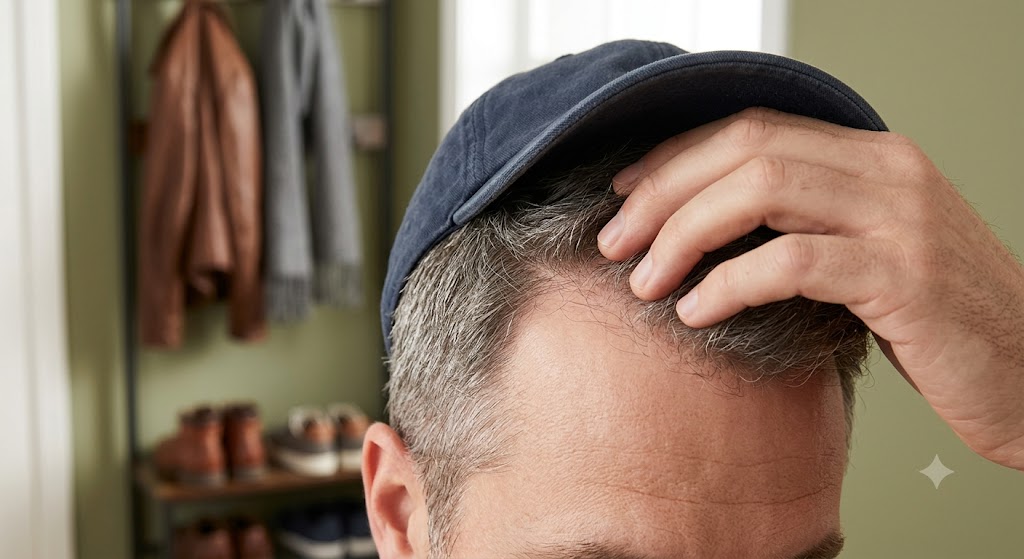
You take the hat off at the end of the day and the first thing you notice is an itch. Not dramatic, just a low, persistent urge to scratch along the crown or hairline. It is a familiar feeling for anyone who wears a baseball cap, beanie, hard hat, or cycling helmet for hours. Most of the time it is not a sign of anything serious. It is simply the scalp reacting to a few hours of trapped heat, moisture, and pressure.
What This Symptom Feels Like
The itch usually starts while the hat is still on or appears within minutes of taking it off. It can feel prickly, slightly burning, or just vaguely uncomfortable. Some people notice the scalp feels warmer or oilier than usual. Mild flaking or a greasy film may appear along the hairline. The sensation often fades once the head cools and the area is washed, though it can linger for an hour or two.
Common Causes
The main driver is the microclimate a hat creates. Fabric sits close to the skin, raising local temperature and humidity. Sweat has nowhere to evaporate quickly. Sebum (the oil produced by scalp glands) mixes with that moisture and with any residue from hair products. The result is a warm, damp environment that the skin was not designed to stay in for long stretches.
Friction adds another layer. The band or brim repeatedly rubs the same spots, especially if the hat is tight or the fabric is rough. Wool, certain synthetics, or residual detergent can further irritate sensitive skin. If you already have a tendency toward dandruff or seborrheic dermatitis, the extra warmth and oil give the yeast Malassezia a better chance to thrive. That yeast breaks down sebum into irritating byproducts, which is why the itch can feel worse than simple dryness.
Why This Happens
Scalp skin is rich in sebaceous glands—far denser than most other body areas. Those glands keep the skin barrier flexible and help maintain a slightly acidic surface that discourages unwanted microbes. Under a hat, however, the normal balance shifts. Heat increases local blood flow and can nudge sebum production higher. Sweat salts and trapped oil soften the outer skin layer and clog the openings of follicles. The same occlusion that protects you from sun or cold outdoors becomes a mild irritant when it lasts all day.
Researchers studying scalp physiology have noted that higher surface sebum and oxidative stress markers often track with itch and flaking. The scalp’s own microbiome, including Malassezia species that normally live there quietly, becomes more active in the humid conditions. This is not an infection in the usual sense; it is an everyday shift in the environment the skin already hosts. Your scalp still expects periods of air movement and temperature change rather than constant coverage, which is why the itch appears so reliably after prolonged hat use. Related reading on how the scalp responds to open air can be found in Why Your Scalp Still Expects Outdoor Air and Movement.
Less Common but Serious Causes
Occasionally the itch is the first notice of contact dermatitis from a new hat material, dye, or laundry product. Folliculitis—small inflamed bumps around hair follicles—can appear if bacteria or yeast gain a foothold in the trapped moisture. In rarer cases, persistent itching with thick scaling or hair thinning points to underlying psoriasis or a more significant seborrheic dermatitis flare. These are uncommon when the only trigger is a few hours under a hat, but they are worth distinguishing from the ordinary post-hat itch.
Hidden Triggers
Several everyday factors make the itch more likely:
- Wearing the same hat day after day without washing it. Sweat and oil accumulate in the fabric and transfer back to the scalp.
- Tight fit or a stiff band that presses continuously.
- Heavy styling products that already coat the scalp before the hat goes on.
- Dry indoor air or winter heating that makes the skin more reactive once the hat comes off.
- Existing mild dandruff that stays quiet until the microclimate tips it over.
Even a clean, loose cotton cap can produce the sensation if you sweat heavily underneath it.
When to Worry
Most hat-related itch settles once the head is cool, clean, and free of the hat. Pay attention if:
- The itch is intense enough to disrupt sleep or daily focus.
- You see spreading redness, open sores, or pus-filled bumps.
- Thick yellow or white scales appear and do not improve with gentle washing.
- Hair starts coming out in noticeable clumps or the scalp becomes tender to the touch.
- The problem continues for weeks even on days you do not wear a hat.
These signs deserve a look from a doctor or dermatologist rather than more home remedies.
Myths vs Facts
Myth: Hats cause permanent hair loss.
Fact: Ordinary daily hat wear does not pull hair out or permanently damage follicles. Tight traction over many years (as with certain styles) can contribute to hair loss, but a normal cap does not.
Myth: The itch means the hat is dirty or you need to wash your hair more often.
Fact: Extra washing can strip the skin barrier and sometimes worsen itch. The problem is usually the trapped environment, not simple dirt.
Myth: Only wool hats cause this.
Fact: Any fabric that holds heat and moisture can do it. Synthetic performance hats and cotton caps are common culprits too.
How to Manage It
Give the scalp short air breaks during the day when it is practical. At the end of the day, a gentle lukewarm rinse or a mild shampoo removes the mix of sweat and oil. Avoid hot water and harsh scrubbing. If dandruff is already present, a shampoo containing zinc pyrithione, selenium sulfide, or ketoconazole used a few times a week often settles the itch faster than plain cleansing.
Wash hats regularly according to the care label and let them dry completely before the next use. Choose breathable fabrics and a fit that does not dig into the skin. If you wear headgear for work or sport, a thin moisture-wicking liner can reduce direct contact. Keeping the rest of the scalp routine simple—minimal heavy products, consistent but not excessive washing—prevents the baseline oil and residue from building up. For more on how the skin surface responds to everyday coverings and weather, see Why Your Skin Oil Still Expects the Weather.
When to See a Doctor
See a clinician if the itch lasts more than a couple of weeks, spreads beyond the hat area, or comes with significant flaking, redness, pain, or hair shedding. A dermatologist can rule out seborrheic dermatitis, psoriasis, allergic contact dermatitis, or infection and recommend targeted treatment if needed. Most people never reach that point; the ordinary post-hat itch responds to cooler air, cleaner fabric, and a simple wash.
FAQs
Why does the itch often feel worse right after I take the hat off?
Cooling and drying can make the already irritated surface more noticeable for a few minutes. Sweat salts left behind also become more concentrated as moisture evaporates.
Can wearing a hat every day make dandruff worse?
Yes, if you are prone to it. The warm, oily microclimate favors the yeast that contributes to dandruff. Regular hat washing and occasional medicated shampoo usually keep it in check.
Is a hard hat or helmet worse than a soft cap?
Often yes, because they trap more heat and allow less air movement. Short breaks and a clean, moisture-wicking liner help.
Should I stop wearing hats if my scalp itches?
Not necessarily. Most people can continue wearing them with better hygiene, looser fit, and brief air breaks. Only persistent irritation needs a longer pause while the skin recovers.
Does this happen more in winter?
Frequently. Wool or thick winter hats hold heat especially well, and dry indoor air makes the scalp more reactive once the hat comes off.
Conclusion
A mild itch after a full day under a hat is a normal response to heat, sweat, and oil trapped against the scalp. The skin is simply reacting to an environment it rarely encountered for hours at a time in earlier human life. Most cases settle with cooler air, a gentle wash, and cleaner headwear. If the itch becomes intense, persistent, or accompanied by clear skin changes, a quick medical check rules out anything that needs specific treatment. For everyday hat wear, small adjustments keep the scalp comfortable without giving up the practical protection a hat provides.