Yes, it is common for the nose to feel stuffier when you lie down. Gravity, blood flow to the turbinates, and the nasal cycle all play a role in this normal postural change.
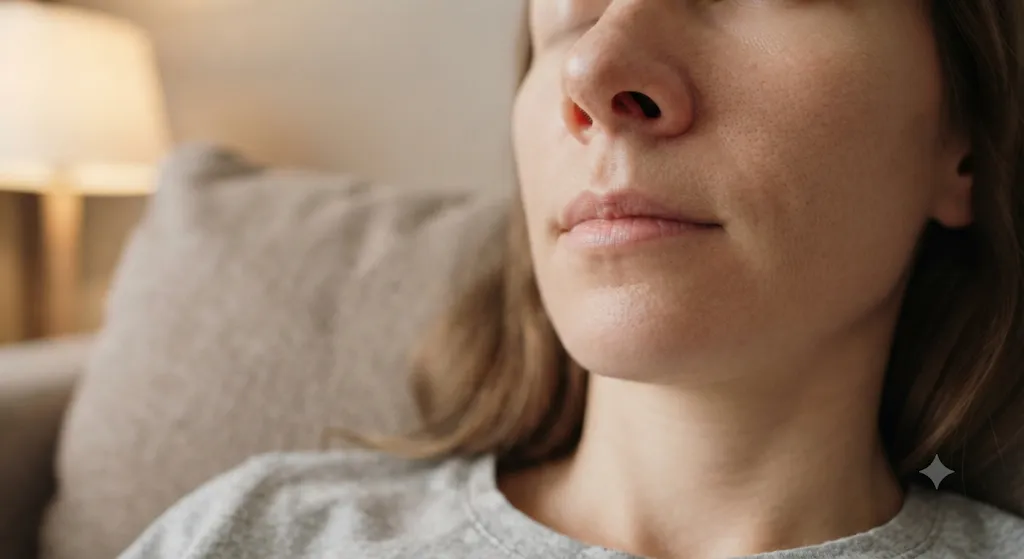
You settle onto the sofa after a long day, or you climb into bed, and within minutes one or both nostrils feel more blocked than they did when you were upright. You might notice it more on the side you are lying on. For many people this is a familiar nightly pattern rather than a sign of a cold or allergy.
This kind of postural stuffiness is common and usually harmless. It reflects how the blood vessels inside the nose respond to a change in body position.
What This Feels Like
The sensation is typically a gradual increase in nasal blockage once you are horizontal. Breathing through the nose feels tighter, sometimes with a mild pressure or the urge to mouth-breathe. It often shifts sides if you roll over. In the morning, after you sit up, the passages usually open again within a short time. There is rarely pain, thick discharge, or fever unless something else is going on.
Common Reasons This Happens
The main driver is gravity and blood distribution. When you are upright, blood is pulled downward. When you lie down, more blood stays in the head and neck. The nasal turbinates—the soft, scroll-like structures that warm and humidify air—contain a rich network of blood vessels. These vessels can fill and swell, narrowing the airway.
Ronald Eccles and other nasal physiologists have described how the erectile tissue of the nasal mucosa is under sympathetic control. When you recline, sympathetic tone often decreases and venous pressure rises, allowing the turbinates to engorge. Objective measures such as acoustic rhinometry and rhinomanometry consistently show reduced nasal patency in the supine position compared with sitting, even in healthy people.
The nasal cycle, the normal alternation of congestion between the two sides every few hours, can also become more noticeable at night. Lying on one side frequently increases blockage on the dependent (lower) side.
Why This Happens
Several overlapping mechanisms contribute:
- Increased venous pressure in the head once gravity no longer assists drainage.
- Relaxation of sympathetic vasoconstrictor tone when you are at rest or supine.
- Possible mild increase in parasympathetic activity that further dilates nasal vessels.
- Slower mucus clearance because the cilia and drainage pathways work less efficiently against gravity.
These are normal postural adjustments, not a disease. People with already narrow passages, a mild deviated septum, or residual inflammation from a recent cold may simply notice the change more clearly.
Less Common but Serious Causes
If the stuffiness is new, severe, one-sided and constant, or accompanied by facial pain, high fever, thick green discharge, or bleeding, other issues should be considered. These can include acute sinusitis, a foreign body, a nasal polyp, or, rarely, a mass. Persistent nighttime obstruction that interferes with sleep may also be linked to untreated allergic rhinitis or chronic rhinosinusitis.
Hidden Triggers
Dry indoor air, dust mites in bedding, recent alcohol use, certain blood-pressure medications, and pregnancy-related vascular changes can all amplify the normal postural effect. People who already have allergic or non-allergic rhinitis tend to experience a larger increase in resistance when they lie down.
When to Worry
See a clinician if the blockage:
- Lasts for weeks and does not improve when you sit up
- Is accompanied by significant facial pain, fever, or colored discharge
- Causes marked sleep disruption or loud snoring with daytime tiredness
- Occurs with nosebleeds, loss of smell, or visible asymmetry
Occasional mild stuffiness that clears once you are upright is not a warning sign.
Myths vs Facts
Myth: A stuffy nose at night always means you are getting sick.
Fact: Healthy people show measurable increases in nasal resistance simply from lying down.
Myth: You should force yourself to breathe only through the nose no matter what.
Fact: Temporary mouth breathing while the turbinates settle is normal and not harmful.
Myth: Only people with allergies notice this.
Fact: Studies of healthy volunteers confirm the same postural change, though it is often milder.
How to Manage It
Simple adjustments usually help:
- Elevate the head of the bed a few inches or use an extra pillow so the head is slightly above the heart.
- Sleep on your back if side-lying makes one nostril worse, or alternate sides.
- Keep the room humidity moderate (around 40–50 %) so the mucosa does not dry and swell further.
- Rinse with saline before bed if you have mild residual mucus.
- Avoid heavy meals, alcohol, and known irritants in the hours before lying down.
These steps reduce the degree of engorgement without medication for most people.
When to See a Doctor
If positional stuffiness is new, progressive, or paired with other symptoms such as persistent snoring, daytime sleepiness, or facial pressure, a clinician can check for contributing factors like allergic rhinitis or structural issues. Most cases, however, need only the reassurance that the change is physiologic.
FAQs
Why does only one side feel blocked when I lie on that side?
The dependent turbinate receives a greater share of the increased venous blood, so the lower nostril narrows more. Rolling over usually reverses the pattern.
Is this the same as the nasal cycle?
They interact. The nasal cycle is the spontaneous left-right alternation; posture can exaggerate whichever side is already more congested or create an additional postural bias.
Will a decongestant spray help?
Short-term use can shrink the vessels, but regular use risks rebound swelling. Elevation and humidity are safer first steps for purely positional symptoms.
Does this mean I have sleep apnea?
Not by itself. Positional nasal resistance increases in both healthy people and those with sleep-disordered breathing. Snoring, witnessed pauses, and daytime fatigue are the more relevant clues.
Why does it improve as soon as I sit up?
Gravity once again assists venous drainage, sympathetic tone rises with activity, and the turbinates deflate, restoring airflow within minutes.
Conclusion
Feeling stuffier once you lie down is a normal consequence of how nasal blood vessels respond to posture and gravity. For the great majority of people it is temporary, side-shifting, and relieved by simply sitting up or elevating the head. Understanding the mechanism removes the worry and points toward simple positional habits that keep nighttime breathing comfortable.
Related reading: Is It Normal for Your Nose to Run in the Cold?, Is It Normal for Your Ears to Pop When You Swallow?, and Is It Normal for Your Nose to Feel Dry Indoors?.