
Many people notice lower-back soreness after carrying a backpack. Learn why the lumbar spine and its supporting muscles respond this way, when the ache is ordinary, and when it needs attention.
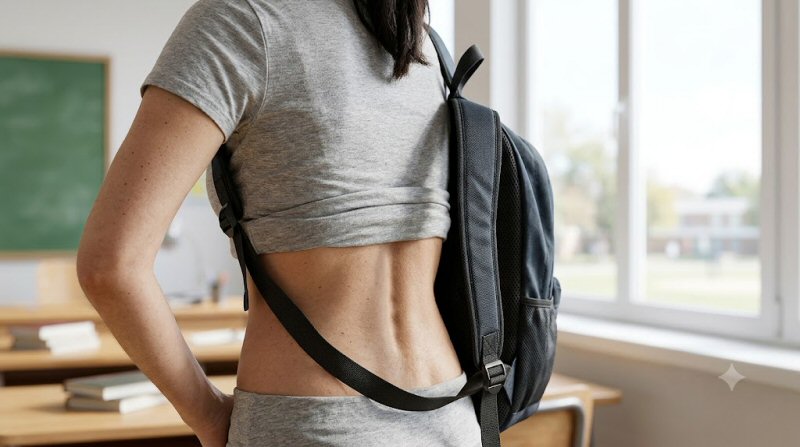
You slip on a backpack for a commute, a hike, or a day of errands. By the time you take it off, a dull ache has settled across the lower back, right around the belt line. It is not sharp, just a steady heaviness that makes you want to stretch or lean against a wall. For most people this is a familiar, temporary response to carrying weight on the back.
The lumbar spine is built to handle load, yet modern backpacks deliver that load in a concentrated, sustained way that the tissues notice. Understanding the mechanics helps separate ordinary muscle and disc fatigue from something that needs a closer look.
What This Ache Feels Like
The sensation is usually a broad, achy tightness centered on the lower lumbar area, sometimes spreading a little into the sides of the waist or the upper buttocks. It often builds gradually while the pack is on and peaks shortly after you remove it. Bending forward, standing still, or sitting down can make it more noticeable. In most cases it eases within hours once the load is off and you move around normally.
Some people also feel a mild stiffness when they first stand after sitting, or a sense that the back wants to arch or round to “unload.” The discomfort is rarely sharp or electric unless the pack was very heavy, worn on one shoulder, or carried for many hours.
Common Reasons the Lower Back Notices a Backpack
A backpack adds vertical and slightly anterior force to the torso. Roughly 30 percent of that force can reach the lower back even when a hip belt is used; the rest is borne by the shoulders and upper back. The lumbar discs, especially L4–L5 and L5–S1, experience extra compression. Upright MRI studies have shown that a pack weighing about 10 percent of body weight measurably reduces disc height at these lower levels and increases anterior compression at L5–S1.
The paraspinal muscles (erector spinae and multifidus) must continuously adjust. In some walking studies their activation actually decreases slightly as the body stiffens the spine and shifts work to the hips, yet the muscles still fatigue from the prolonged low-level demand and from the small postural corrections needed to keep balance. One-shoulder or handbag carries create even higher asymmetric muscle forces and disc stress; a properly worn two-strap backpack is the milder option among common bag styles.
Related reading on how the lower back is designed for varied, intermittent loading rather than sustained packs appears in Why Your Lower Back Still Expects You to Hinge and Walk and Why Your Erectors Still Expect an Upright Day.
Why the Ache Is Usually Temporary
Intervertebral discs are sensitive to sustained compression; they lose a little fluid and height under load, which can stimulate local nerves and create an achy feeling. Once the pack comes off, the discs begin to rehydrate and the muscles relax. Light movement helps this recovery. Most people also unconsciously change their walking pattern—slightly shorter steps or a stiffer trunk—which further loads the lumbar tissues in a non-habitual way.
Heavier packs (above roughly 10–15 percent of body weight) or longer durations amplify these effects. Children and adolescents, whose spines are still growing, often report more noticeable soreness with school backpacks in this range. Adults experience the same mechanics, just with different tissue resilience.
Less Common but More Serious Patterns
An ordinary post-backpack ache stays local, improves with rest and gentle movement, and does not travel down the leg. Pain that shoots into the buttock or leg, numbness or tingling in the foot, weakness when walking on the toes or heels, or pain that wakes you at night and does not ease with position changes is different. These can signal nerve irritation, a disc issue that has become symptomatic, or, rarely, other spinal problems. A sudden severe pain after lifting a very heavy pack, especially with difficulty controlling the bladder or bowel, needs prompt medical evaluation.
Hidden Triggers That Make It Worse
Wearing the pack on one shoulder, letting the straps hang loose so the load sits low, or carrying far more than 10–15 percent of body weight increases asymmetric stress. A soft, poorly fitted pack that forces you to lean forward or round the upper back also shifts extra demand onto the lumbar spine. Standing still for long periods with the pack on (rather than walking) removes the natural pumping action of gait and can intensify the ache. Dehydration, fatigue, or starting with already tight hip flexors or weak glutes makes the back muscles work harder to stabilize the load. The trapezius and shoulder girdle also share the burden; see Why Your Trapezius Still Expects a Pack on Your Back for the upper-body side of the same story.
When to Worry
Seek advice if the ache lasts more than a few days after ordinary use, spreads into the leg, is accompanied by numbness, weakness, or balance changes, follows a clear injury, or occurs with unexplained weight loss, fever, or night pain that does not improve when you change position. Progressive difficulty with everyday bending or walking is another reason to be checked. For the large majority of people who simply feel a temporary lumbar ache after a reasonable backpack load, these red flags are absent.
Myths vs Facts
Myth: Any lower-back ache after a backpack means you have damaged a disc.
Fact: Temporary compression and muscle fatigue are normal responses. Disc height changes reverse once the load is removed; lasting structural injury is uncommon with moderate, occasional use.
Myth: A backpack is always worse for the back than a shoulder bag.
Fact: Biomechanical comparisons show that a balanced two-strap backpack generally produces less asymmetric muscle force and lower peak disc stress than a one-shoulder bag or handbag of the same weight.
Myth: You should never carry more than a few pounds.
Fact: Loads around 10 percent of body weight are commonly studied and well tolerated by most healthy adults for moderate durations; the key variables are fit, duration, and whether the carry is balanced.
How to Manage and Reduce the Ache
Use both straps and snug them so the pack sits high and close to the body rather than hanging low on the hips. A hip belt, when the pack has one, transfers some load away from the shoulders and upper spine. Keep the total weight closer to 10 percent of body weight for regular use; for occasional heavier loads, shorten the time. After you remove the pack, walk around, gently hinge at the hips a few times, or lie on your back with knees bent for a few minutes to let the discs unload.
Strengthening the glutes and deep abdominals, and keeping the hips and thoracic spine mobile, gives the lumbar region better support so it does not have to compensate alone. If you carry a pack daily (students, commuters, hikers), vary the load and include pack-free walking intervals. Simple heat or a short walk usually settles the ordinary ache faster than prolonged rest.
When to See a Doctor
See a clinician if the pain is severe, lasts beyond a few days of ordinary activity, travels below the knee, includes neurological symptoms, or follows trauma. A physical therapist or physician can assess posture, strength, and movement patterns and rule out other contributors. Imaging is rarely needed for a straightforward, improving post-backpack ache.
FAQs
Is it normal for kids’ backs to hurt from school backpacks?
Yes, temporary soreness is common when packs exceed about 10–15 percent of body weight. Encouraging both straps, lighter loads, and locker use when possible reduces the frequency.
Does a hip belt really help the lower back?
It transfers a portion of the vertical force to the pelvis, which can lower the demand on the lumbar spine and shoulders for many people, provided the belt is fitted snugly.
Why does the ache sometimes feel worse after I take the pack off?
Muscles that have been working in a stiffened pattern suddenly relax, and the discs begin to re-expand; both can create a temporary increase in awareness of the tissues.
Should I avoid backpacks completely if I have a history of back pain?
Not necessarily. A well-fitted, moderate-weight pack carried for limited periods is often better tolerated than unbalanced bags. Individual advice from a clinician is useful if pain is recurrent.
Can poor walking posture with a pack cause lasting problems?
Occasional use rarely does. Chronic heavy or asymmetric loading combined with limited recovery can contribute to ongoing stiffness or discomfort; balancing load, fit, and recovery time keeps the risk low.
Conclusion
A lower-back ache after carrying a backpack is a common, usually short-lived response to extra lumbar compression and muscle demand. The discs compress a little, the stabilizing muscles fatigue, and the sensation appears—then fades once the load is gone and normal movement resumes. Paying attention to pack weight, fit, and balance, and giving the back brief recovery afterward, keeps the experience ordinary for most people. Persistent, radiating, or neurologically accompanied pain is the signal to look further, not the everyday post-pack soreness itself.


