Eyes aching after long phone reading is common. Learn why close screens strain the focusing muscles and tear film, and simple ways to ease it.
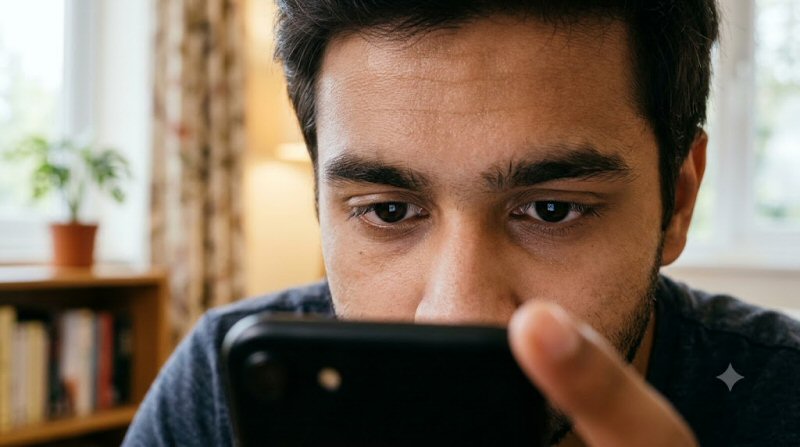
You set out to check a few messages and somehow end up scrolling or reading for an hour. When you finally look up, your eyes feel heavy, achy, and a little sore behind the lids. The feeling is familiar if you spend much of the day on a phone. For most people it is a normal response to prolonged close work rather than a sign that something is wrong with the eyes themselves.
The ache usually sits in or behind the eyes, sometimes spreading to the brow or temples. Vision may feel slightly blurred when you glance away, or the eyes can feel dry and gritty at the same time. These symptoms fall under the broader umbrella of digital eye strain, also called computer vision syndrome. Research groups that have measured it, including work by Mark Rosenfield and colleagues, find that a large share of regular screen users report exactly this pattern of tired, aching eyes after sustained near tasks.
What This Symptom Feels Like
The sensation is more of a deep tiredness or pressure than a sharp pain. Many people describe it as the eyes “working too hard” or feeling as though they need a rest. It often builds gradually and is most noticeable when you stop looking at the screen. Blinking may feel sticky, and the eyes can water briefly once you look away. The ache is usually bilateral and improves within minutes to an hour of resting the eyes or looking into the distance.
Common Causes
Phones are held closer than books or computer monitors. Typical reading distance on a smartphone is often 15–25 cm, which demands more accommodative effort (the focusing work of the ciliary muscle) and more convergence (the eyes turning inward). James Sheedy’s earlier work on asthenopia distinguished “internal” symptoms of strain and ache linked to focusing and binocular effort from “external” symptoms of dryness and irritation. Phone use tends to recruit both.
Blink rate also drops. Studies that filmed people reading, including classic work by Kazuo Tsubota and later measurements by Rosenfield’s group, show blink frequency falling from roughly 15–20 per minute during conversation to 5–7 or fewer during focused reading. Incomplete blinks become more common, so the tear film is not refreshed as thoroughly. The combination of sustained near focus and a less stable tear film is enough to produce the ache.
Why This Happens
The visual system is built for frequent changes in gaze and distance. Holding a small, high-contrast screen at a fixed close distance for long periods keeps the ciliary muscle in continuous contraction and the medial rectus muscles under constant load. Over time the system signals fatigue. At the same time the reduced blink rate allows the tear film to thin, especially in dry indoor air or under air conditioning. When the surface of the eye becomes slightly unstable, the brain interprets the resulting irritation and focusing effort as ache.
Uncorrected refractive error, even a small amount of astigmatism or early presbyopia, amplifies the problem because the eyes must work harder to keep the text clear. Glare, small font size, and low contrast add further demand. None of these factors damage the eye permanently in ordinary use; they simply create temporary overload.
Less Common but Serious Causes
True eye pain that is sharp, one-sided, or accompanied by sudden vision loss, a curtain or flashes of light, marked redness, or nausea needs prompt evaluation. Persistent ache that does not improve with rest, or ache that is clearly linked to new double vision or a drooping lid, should also be checked. In the large majority of phone-related cases, however, the pattern is bilateral, tied to screen time, and reversible.
Hidden Triggers
Several everyday factors make the ache more likely. Low ambient light forces the eyes to rely more on the screen’s brightness. Holding the phone in bed with the head tilted changes neck posture and can add referred tension. Dry air from heating or air conditioning thins the tear film further. Skipping the 20-20-20 habit (every 20 minutes, look 20 feet away for 20 seconds) allows the focusing system no recovery. Even mild dehydration or the residual effect of a long day of other near work can lower the threshold.
When to Worry
See an eye-care professional if the ache is new and severe, if vision stays blurred after you stop reading, if you notice persistent double vision, or if the eyes are markedly red and painful. A sudden change in the pattern, especially with headache that is different from your usual tension, also warrants a check. For the common, screen-linked ache that eases with rest, simple adjustments are usually enough.
Myths vs Facts
Myth: The blue light from the phone is the main cause of the ache.
Fact: Studies that have compared blue-blocking filters with clear lenses, including work reviewed by Rosenfield and others, have not shown consistent relief of eye strain symptoms. The dominant drivers remain sustained near focus and reduced blinking.
Myth: If your eyes ache you must need stronger glasses.
Fact: Many people with perfect vision still develop the ache from close phone use. An eye exam can rule out an uncorrected error, but the primary remedy is usually how the phone is used.
Myth: Eye drops are always required.
Fact: Artificial tears can help when dryness is prominent, yet many people improve with blink awareness, distance breaks, and larger text alone.
How to Manage It
Raise the font size and increase screen contrast so the eyes do not have to work as hard. Hold the phone a little farther away when possible, or rest your arms on a surface to reduce the urge to bring it closer. Follow the 20-20-20 rule and, during breaks, look out a window or across the room. Make a conscious effort to complete full blinks; some people find it helpful to set a quiet reminder. Keep the room reasonably lit so the screen is not the only bright object. If the eyes feel dry, preservative-free artificial tears used occasionally can restore comfort. An eye exam remains useful if symptoms persist despite these steps, both to check refraction and to assess the tear film.
Related reading on the site covers why the eyes still expect distant focus, how the tear film depends on complete blinks, and why blink rate drops during near work.
When to See a Doctor
Book an appointment if the ache continues for days after you reduce phone time, if it is accompanied by new flashes, floaters, or a shadow in vision, or if you have other symptoms such as a stiff neck that does not ease or a headache that feels different from ordinary tension. Routine eye checks every year or two also catch gradual changes in focusing ability before they become bothersome.
FAQs
Why do my eyes ache more with a phone than with a book?
Phones are usually held closer and the text is smaller, so both focusing and convergence demands are higher. The high-contrast pixels can also encourage fewer complete blinks.
Will this damage my eyesight over time?
Current evidence indicates that ordinary digital eye strain does not cause lasting structural damage. It can, however, make existing refractive needs more noticeable and can contribute to temporary dryness.
Do blue-light glasses help the ache?
Most controlled studies have not found a meaningful reduction in eye-strain symptoms from blue-blocking lenses. Comfort more often improves with larger text, better lighting, and regular distance breaks.
Is the ache worse if I already have dry eyes?
Yes. An unstable tear film adds irritation on top of the focusing effort, so the same reading time feels more uncomfortable. Treating the dryness usually reduces the ache as well.
How long should the ache last after I stop reading?
Most people notice improvement within 15–30 minutes of looking into the distance and blinking normally. If the ache remains for hours, an eye exam is reasonable to exclude other contributors.
Conclusion
An ache behind the eyes after a long stretch of phone reading is a common, reversible response to sustained near work and reduced blinking. The visual system simply signals that it has been asked to hold a close, demanding task without enough recovery. Simple changes in distance, text size, lighting, and blink habits usually restore comfort. If the pattern changes or fails to improve with rest, a professional check provides reassurance and rules out less common causes.