Heavy, droopy eyelids after hours of screen use are common. This usually comes from reduced blinking, mild dryness, and ocular muscle fatigue rather than a serious problem.
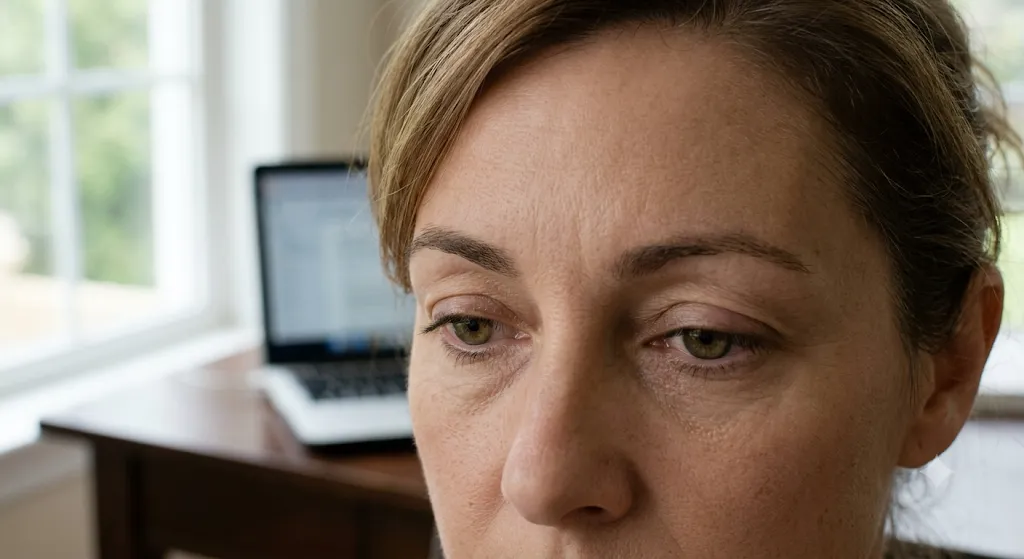
You finish a long stretch of emails or a video meeting and notice your eyelids feel weighted, almost reluctant to stay fully open. They are not swollen, and your vision is mostly clear, yet the lids simply feel heavy. This sensation is familiar to many people who spend hours looking at screens, and in most cases it is a normal response to the way modern visual work taxes the eyes.
What This Symptom Feels Like
The heaviness is usually localized to the upper lids. People describe a mild droopiness, a desire to rub the eyes, or the sense that it takes extra effort to keep the lids open. It often appears after two or more hours of continuous near work and eases once you look away, blink deliberately, or rest. There is rarely sharp pain or sudden double vision; the feeling is more of fatigue than injury.
Common Causes
The most frequent reasons are straightforward:
- Reduced blink rate and incomplete blinks during focused screen viewing
- Mild evaporative dry eye that makes the lid surfaces feel sticky or tired
- Fatigue of the small muscles that lift and stabilize the eyelids
- Overall ocular and mental fatigue after sustained concentration
- Low ambient humidity or air conditioning that dries the tear film faster
These factors often overlap. A dry surface forces the lids to work a little harder, which adds to the sense of heaviness.
Why This Happens
Normal blinking spreads a fresh layer of tears across the eye roughly every three to five seconds. Research led by Kazuo Tsubota and others has shown that people blink far less often—and less completely—when they stare at a screen. Incomplete blinks leave the meibomian glands less stimulated, so the oily layer of the tear film thins and evaporation increases. The resulting dryness creates subtle friction each time the lid moves.
The levator palpebrae superioris (the muscle that lifts the upper lid) and the orbicularis oculi can become mildly fatigued after hours of this extra effort, especially if you are also fighting to keep focus on small text. The sensation is similar to the tiredness you feel in your forearm after holding a phone for a long time: the tissue is not damaged, it is simply overworked relative to its usual rhythm. Indoor lighting and fixed head position can add to the load by reducing the natural variety of eye movements that outdoor or mixed visual tasks provide. Related dryness is discussed in Is It Normal for Your Eyes to Feel Dry after Screen Time?, and the blink-rate mismatch is covered in Why Your Blink Rate Still Expects Outdoor Scanning.
Less Common but Serious Causes
True eyelid drooping (ptosis) that is constant, one-sided, or accompanied by double vision, unequal pupils, or sudden weakness elsewhere needs prompt medical attention. Rare neurologic conditions, thyroid eye disease, or myasthenia gravis can present with fluctuating lid heaviness, but these usually include additional clear signs and are far less common than ordinary screen-related fatigue. A sudden change in lid position after trauma or with a severe headache also warrants evaluation.
Hidden Triggers
Several everyday factors can amplify the feeling:
- Contact lenses worn for many hours, which already stress the tear film
- Medications that reduce tear production (certain antihistamines, antidepressants, or blood-pressure drugs)
- Poor sleep the night before, which lowers overall muscle endurance
- Allergies that add mild lid swelling or itching
- Screen brightness set too high or too low, forcing extra squinting
When to Worry
See a clinician if the heaviness is sudden and severe, affects only one eye, comes with double vision, headache, or weakness in other muscles, or does not improve after a day or two of rest and better blinking habits. Gradual, bilateral heaviness that appears only after long screen sessions and clears with breaks is almost always benign.
Myths vs Facts
Myth: Heavy eyelids after screens mean you are damaging your eyes permanently.
Fact: The sensation is usually temporary muscle and surface fatigue that reverses with rest and better visual habits.
Myth: Only older adults get this.
Fact: Children, students, and young office workers report the same lid heaviness after extended device use.
Myth: You need special eye drops every time it happens.
Fact: Many people improve simply by blinking more fully and taking short visual breaks; drops help only when dryness is clearly present.
How to Manage It
Simple adjustments usually help:
- Follow the 20-20-20 idea: every 20 minutes, look at something 20 feet away for 20 seconds and blink fully several times.
- Consciously complete each blink so the lids meet; this stimulates the oil glands.
- Lower screen brightness to match the room and raise the monitor so you look slightly downward, which reduces lid aperture and evaporation.
- Use a humidifier if the air is dry, and stay hydrated.
- Take a short walk or simply close your eyes for a minute between tasks.
If mild dryness persists, preservative-free artificial tears used a few times a day can restore comfort. Vision that blurs after prolonged reading is a related issue covered in Is It Normal for Your Vision to Get Blurry After Reading for a Long Time?.
When to See a Doctor
An eye-care professional can check for significant dry-eye disease, refractive error, or less common lid disorders if the heaviness continues despite the steps above, interferes with daily tasks, or is accompanied by other symptoms. Most people never need more than an office evaluation and practical advice.
FAQs
Is it normal for only one eyelid to feel heavier?
Mild asymmetry is common because one eye may be slightly drier or more strained. Persistent one-sided droop that does not vary with screen use should be checked.
Can poor sleep make the heaviness worse?
Yes. Insufficient sleep reduces muscle endurance and tear stability, so the same screen time feels more tiring the next day.
Do blue-light glasses prevent heavy eyelids?
Evidence is limited. Reducing overall screen time, improving blink habits, and managing dryness are more consistently helpful than filtering blue light alone.
Why do my eyelids feel heavy even after I stop looking at the screen?
The muscles and tear film need a short recovery period. The sensation usually fades within 15–30 minutes of deliberate blinking and distance viewing.
Should children get heavy eyelids from tablets?
Yes, the same mechanisms apply. Regular breaks and outdoor time help protect developing visual systems.
Conclusion
Heavy eyelids after screen time are a common, usually harmless sign that the eyes have been working in a narrow, low-blink pattern for too long. The muscles and tear film are simply signaling fatigue. Short visual breaks, fuller blinks, and attention to dryness almost always restore comfort. If the feeling stays one-sided, sudden, or accompanied by other neurologic symptoms, a professional check is wise—but for most people the remedy is as simple as looking up, blinking fully, and giving the lids a brief rest.