A pop or click in your ears during a yawn is usually the Eustachian tubes opening to equalize middle-ear pressure. Here is when that sound is ordinary and when it is not.
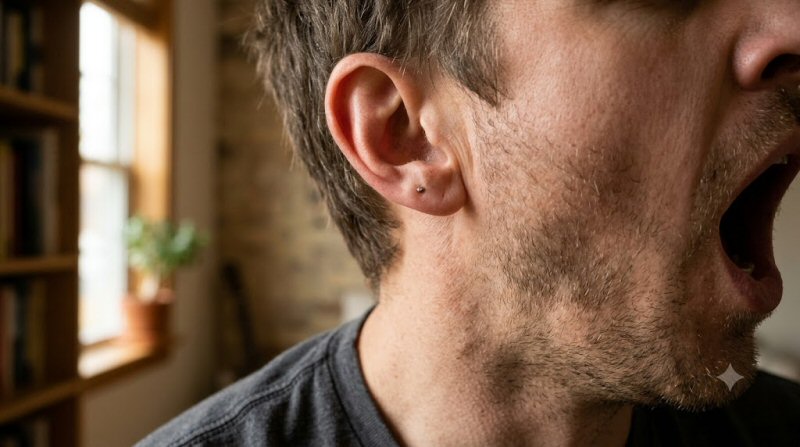
You take a deep breath, the jaw drops, the throat stretches, and somewhere inside one or both ears there is a soft pop or a brief click. It is not painful. It does not leave the ear ringing for long. You finish the yawn and the world sounds the same again, or a little clearer.
That pop is one of the more ordinary sounds the human ear produces. It is not a warning that something is loose. It is the sound of a small tube doing the job it was built to do every time the soft palate and jaw move strongly enough.
What This Symptom Feels Like
Most people describe a brief, single pop, click, or crackle felt more than heard. It happens at the peak of the yawn, when the jaw is widest. Sometimes only one ear pops. Sometimes both do. The sensation is usually followed by a tiny sense of relief or clearer hearing, especially if the ear had felt slightly full beforehand.
It is not a loud bang. It does not come with dizziness that lasts, sharp pain, or fluid leaking from the ear. The pop lasts a fraction of a second. Once the yawn ends, the ear is quiet again.
If the pop is accompanied by a longer crackle or a feeling that something is still moving, that can still be normal when you have a mild cold or allergies, but it is a slightly different event.
Why This Happens
Each middle ear is an air-filled space sealed off from the outside by the eardrum. That space connects to the back of the nose and throat through a narrow passage called the Eustachian tube, named after the Italian anatomist Bartolomeo Eustachi who described it in the 16th century.
The tube is closed most of the time. This keeps germs and mucus from the throat out of the middle ear. It opens only briefly, when certain muscles contract. The main muscles involved are the tensor veli palatini and the levator veli palatini. These muscles sit around the soft palate and the cartilaginous part of the tube. When they pull, the tube dilates for a fraction of a second and lets a small amount of air move in or out.
Yawning is especially effective at opening the tube because it produces a strong, coordinated stretch of the jaw, soft palate, and throat. Swallowing does the same thing on a smaller scale. Chewing can too. Studies of normal adults show the tube opens roughly 1.4 times per minute during the day, each opening lasting about 0.4 seconds, and the frequency drops during sleep.
The “pop” is the moment pressure on both sides of the eardrum becomes equal again. If the middle-ear pressure was a little lower or higher than the air outside, the eardrum snaps back toward its neutral position as air rushes through the newly opened tube. That snap is what you feel and sometimes hear.
Charles Bluestone and other otologists have described the Eustachian tube as a pressure-regulating valve whose normal job is this brief, intermittent opening. Adam Politzer, working in the 19th century, already linked problems with the tube to middle-ear fluid. The everyday pop during a yawn is simply the valve working as designed.
Common Everyday Triggers
You are most likely to notice the pop when there is a small pressure difference to equalize:
- After a short elevator ride or a drive over a hill
- When you first stand up after lying down
- During or right after a cold, when the tube lining is a little swollen
- In dry indoor air that makes the lining stickier
- After a long period of quiet sitting when you have not swallowed much
It can also happen with no obvious pressure change. The tube opens many times a day simply as part of normal ventilation. A deep yawn just makes the opening more complete and therefore more noticeable.
People who fly often learn to yawn or swallow on purpose during descent because the same mechanism clears the full feeling. The same principle applies on the ground.
When the Pop Is Still Normal
A painless pop or click that happens only during a yawn, swallow, or chew, and that leaves no lasting fullness, hearing change, or pain, is ordinary. It does not mean the ear is “loose” or that you are developing a problem. It means the tube opened.
Some people notice it more on one side than the other. The tubes are not perfectly symmetric, and mild differences in nasal airflow or jaw movement can make one side open more readily. That asymmetry is common and usually harmless.
When to Pay Attention
Most yawning pops need no action. Contact a clinician if you notice any of the following:
- Pain that lasts after the pop, or pain that is sharp and one-sided
- A feeling of fullness or muffled hearing that does not clear within a day or two
- Repeated popping that continues for hours even when you are not yawning or swallowing
- Dizziness, spinning, or a sense that the room is moving with the pop
- Fluid, discharge, or blood from the ear
- A sudden drop in hearing that does not return
- The pop only started after a recent ear infection, airplane flight with lasting symptoms, or trauma
Persistent Eustachian tube dysfunction, middle-ear fluid, or, rarely, a patulous (abnormally open) tube can produce ongoing symptoms. These are not the ordinary single pop of a yawn. A clinician can check the eardrum and middle-ear pressure if symptoms linger.
Myths vs Facts
Myth: Ears that pop when you yawn are damaged or “loose.”
Fact: The pop is the normal sound of the Eustachian tube opening and the eardrum equalizing. It is evidence the valve is working.
Myth: You should never force a yawn to clear your ears.
Fact: A natural yawn or swallow is one of the gentlest ways to open the tube. Aggressive nose-blowing or repeated forceful Valsalva maneuvers can be more irritating if the tube is already swollen.
Myth: Only people with colds or allergies get ear pops.
Fact: Healthy ears pop during yawns and swallows many times a day. You simply notice it more when the opening is larger or when a pressure difference is present.
How to Manage Occasional Fullness
If one ear feels a little blocked and a yawn does not clear it, simple steps often help:
- Swallow a few times or sip water
- Chew gum or a soft snack
- Yawn again, or open the jaw wide on purpose
- Try a gentle “pop”: close the mouth, pinch the nose, and blow very lightly as if blowing the nose (stop if it hurts)
- Stay hydrated so the tube lining stays less sticky
- If allergies or a cold are involved, treat the nasal congestion; the tube opening often improves as the nose clears
Avoid repeated hard nose-blowing or holding the nose and blowing forcefully for long periods. Those maneuvers can push mucus toward the middle ear or irritate an already sensitive tube.
FAQs
Is it normal for only one ear to pop when I yawn?
Yes. The two Eustachian tubes do not always open with equal force. Mild asymmetry is common and usually harmless if there is no pain or lasting hearing change.
Why does the pop feel stronger when I have a cold?
Swelling and mucus make the tube stickier, so a larger pressure difference can build before it opens. When it finally does open during a yawn, the equalization can feel more noticeable.
Can yawning too much damage my ears?
No. Ordinary yawning is a normal way the tube opens. The concern would be forceful attempts to equalize pressure when the tube is blocked, not the yawn itself.
Does the pop mean I have fluid in my ear?
A single painless pop during a yawn does not. Ongoing crackling, a blocked feeling that lasts days, or muffled hearing can sometimes indicate fluid, and those symptoms are worth checking if they persist.
Should I try to make my ears pop on purpose?
If an ear feels full after a pressure change (elevator, hill, plane), a natural yawn or swallow is a reasonable first step. If it does not clear and symptoms continue, gentle methods or medical advice are better than repeated forceful attempts.
Conclusion
A brief pop or click in the ears during a yawn is, for most people, simply the Eustachian tubes doing their ordinary job of equalizing middle-ear pressure. The muscles of the soft palate and jaw pull the tube open for a fraction of a second, air moves, and the eardrum settles. The sound is the valve working, not a sign that something is wrong.
Notice it if you like; it is one of the small, reliable mechanics of the human ear. Pay attention only if the pop is joined by lasting pain, fullness, hearing change, or dizziness. In the absence of those, the next yawn can come and go without concern.