
Your teres minor, a small but vital rotator cuff muscle, evolved for external rotation and shoulder stability during overhead reaches and turns. Desk work and forward postures leave it underused.
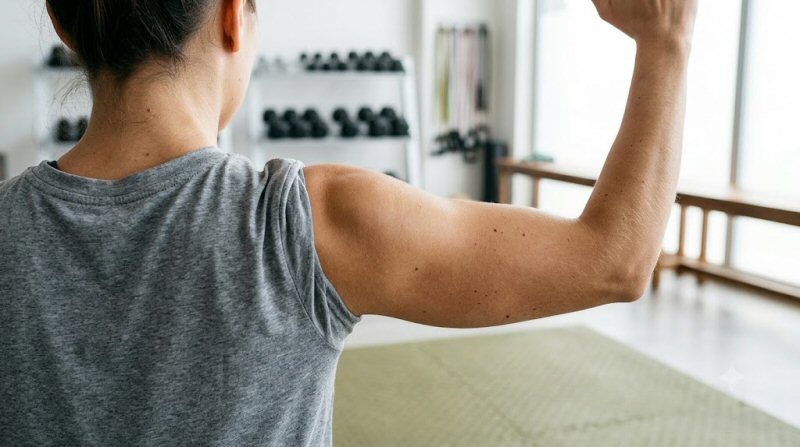
Most of us never think about the small muscle tucked along the outer edge of the shoulder blade. Yet when you reach overhead to grab a high shelf, turn a stiff jar lid, or throw a ball, a quiet strip of tissue called the teres minor is working hard to rotate your arm outward and keep the ball of the shoulder seated in its socket. Modern days spent typing, driving, and scrolling rarely ask for that outward turn. The muscle still expects the occasional external rotation that our ancestors used for climbing, carrying, and throwing—and when it doesn’t get it, the shoulder can start to feel stiff, weak, or oddly unstable.
What the Teres Minor Actually Does
The teres minor is one of the four rotator cuff muscles. It runs from the lateral border of the scapula to the greater tubercle of the humerus. Its main job is external (lateral) rotation of the arm at the shoulder joint. It also helps stabilize the humeral head, especially when the arm is moving into internal rotation or during overhead actions, preventing the ball from slipping forward or backward. Together with the infraspinatus, it counters the strong internal rotators (subscapularis, pectoralis major, latissimus dorsi) that dominate everyday postures.
Classic shoulder research by Inman and colleagues mapped how the cuff muscles share load. Later EMG studies have shown that the teres minor is particularly active during the acceleration and deceleration phases of throwing and during external rotation in abduction. When it is weak or tight, external rotation range drops and the joint loses some of its dynamic control.
The Ancestral Expectation
Human shoulders evolved for a mix of hanging, climbing, overhead reaching, and throwing. These actions repeatedly call for external rotation under load—turning the palm up while lifting, stabilizing while carrying a heavy object at arm’s length, or decelerating a throw. The teres minor, though small, is built for that intermittent but precise work. In a life of varied arm positions and occasional forceful outward turns, the muscle stays balanced with its internal-rotator partners.
Today the typical day keeps the arms in front of the body, elbows bent, palms facing each other or down. Desk work, phone use, and driving all favor internal rotation and protracted shoulders. The external rotators, including the teres minor, receive little stimulus. Over months this can leave the muscle under-trained while the internal rotators and pectorals adaptively shorten—the classic evolutionary mismatch that shows up as rounded shoulders and restricted external rotation.
How the Mismatch Shows Up
People often notice a vague tightness across the back of the shoulder or difficulty reaching behind the head or into a back pocket. Some feel the shoulder “give” or feel less secure when they lift the arm overhead. Others simply lose the last few degrees of outward rotation and start compensating with the neck or lower back. Because the teres minor works in concert with the rest of the cuff, the complaint is rarely isolated; it usually appears alongside broader shoulder stiffness or fatigue after desk days. Related sensations are covered in our pieces on why the rotator cuff still expects reaching behind and why the shoulders still expect a natural hang.
Common Everyday Triggers
- Hours of keyboard and mouse work with the arms internally rotated
- Driving with both hands high on the wheel
- Sleeping on the side with the arm tucked under the pillow
- Carrying heavy bags on one shoulder (which can overload the opposite side)
- Sudden return to overhead sports after months of desk posture
Desk-related shoulder ache is so common that we wrote a separate article on whether it is normal for shoulders to ache after a desk day.
When to Worry
Mild tightness or a gradual loss of external rotation that improves with gentle movement is usually benign. Seek assessment if you notice:
- Sharp pain with external rotation or reaching overhead
- Night pain that wakes you
- Noticeable weakness when trying to turn the arm outward against resistance
- A feeling of instability or the shoulder “slipping”
- Symptoms that follow a specific injury or fall
Persistent weakness in external rotation can signal rotator-cuff tendinopathy or, less commonly, nerve irritation (axillary nerve). These need professional evaluation rather than more stretching.
Myths vs Facts
Myth: The teres minor is too small to matter.
Fact: Its stabilizing role is outsized relative to its size; loss of function is linked to poorer overhead control.
Myth: Stretching the chest alone fixes the problem.
Fact: You also need to actively train external rotation so the muscle regains strength and endurance.
Myth: If it doesn’t hurt, it doesn’t need attention.
Fact: Underuse can quietly reduce range and stability long before pain appears.
How to Give It the Occasional Work It Expects
You do not need long gym sessions. Short, frequent doses of external rotation restore the balance.
- Side-lying or standing external-rotation with a light band or small dumbbell, elbow at the side, 2–3 sets of 10–15 slow reps
- Prone horizontal abduction with thumbs up (the “T” position) to load the posterior cuff
- Wall slides or door-frame external-rotation stretches to regain range
- Simply turning the palms up and reaching slightly overhead a few times each hour at the desk
- Avoid prolonged internal-rotation postures; set a timer to open the chest and rotate the arms outward
Progress gradually. The tendon responds best to consistent moderate load rather than sudden heavy work.
Frequently Asked Questions
Is the teres minor the same as the teres major?
No. The teres major is a larger internal rotator and adductor that assists the latissimus dorsi. The teres minor is the smaller external rotator that belongs to the rotator cuff.
Can weak teres minor cause shoulder pain?
It can contribute to posterior shoulder discomfort and reduced overhead stability, especially when combined with tight internal rotators. Isolated teres-minor pain is uncommon; the whole cuff usually shares the load.
How often should I train external rotation?
Two to three short sessions a week plus daily micro-movements at the desk are usually enough for most people who do not do overhead sports.
Does sleeping position affect it?
Yes. Side-sleeping with the arm pinned under the body keeps the shoulder internally rotated for hours. A supportive pillow that keeps the arm more neutral can help.
Should I see a doctor for limited external rotation?
If the loss is sudden, painful, or accompanied by weakness, yes. Gradual stiffness that responds to gentle exercise is often manageable with self-care and, if needed, a physiotherapist.
Conclusion
The teres minor is a small muscle with a clear evolutionary job: provide external rotation and dynamic stability whenever the arm reaches, turns, or throws. Modern forward-arm postures give it little of that work. Restoring occasional, deliberate external rotation—through simple band exercises and posture breaks—keeps the muscle and the rest of the cuff ready for the movements they were built to handle. The shoulder does not need constant training, but it does notice when the outward turn disappears for months at a time.


