
The side-neck sternocleidomastoid still expects to turn the head while you walk and glance. A fixed screen leaves it holding, then a long look sideways aches.
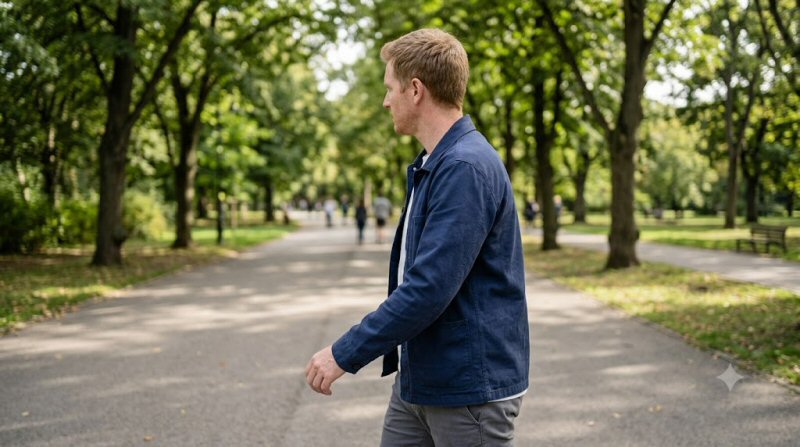
The rope on the side of your neck has a job that a monitor almost never asks for. The sternocleidomastoid, the SCM, runs from the breastbone and the inner collarbone up to the mastoid bone behind the ear. Turn your head fully to one side and the opposite SCM stands out. That turn, plus a small tilt and a lift of the breastbone when breathing hard, is the work it was built for. Walking used to include it all day: scanning a path, glancing at a companion, looking back over a shoulder, checking a load. A screen day replaces those turns with one long hold. The chin drifts forward, the muscle stays slightly on, and by evening the side of the neck feels tight, tender, or oddly connected to a temple ache.
That is not a sign the neck “went out.” It is a turning muscle asked to be a posture brace. The mismatch is ordinary. It is also easy to give back a few real turns, as long as a sudden one-sided weakness or a new severe headache is not waved off as desk strain.
What a Quiet Turning Muscle Feels Like
People rarely name the sternocleidomastoid. They say one side of the neck feels like a cord, that looking over the shoulder in the car is the stiff part of the day, or that a long video call leaves a dull pull from the collarbone to the ear. Some feel a tender spot just behind the jaw angle, or a fullness at the front of the neck when they swallow after hours of looking down. Others notice the ache more when they finally turn: a short walk, a check of the blind spot, a conversation across a table.
Janet Travell and David Simons mapped a familiar referral from this muscle. Trigger points in the SCM do not always hurt where the rope is. They can send a dull ache into the forehead, behind the eye, into the ear, or across the cheek, and they can leave a sense of unsteadiness that is not true spinning. Gwendolen Jull and Deborah Falla later showed a related pattern in neck pain: the deep flexors under the throat go quiet, and the superficial SCM works too hard for small head nods. The muscle is not weak in the gym sense. It is over-recruited for a job that used to be shared, and under-used for the full turn it still expects.
What the Muscle Was Built to Do
Anatomists describe two heads. The sternal head and the clavicular head meet on the way to the skull. Acting on one side, the SCM turns the face to the opposite side and tilts the head toward the same shoulder. Acting together, the two sides can lift the chin or, with the head fixed, lift the breastbone as an accessory breath. Nikolai Bogduk’s cervical work and André De Troyer’s respiratory studies put that dual job in plain terms: this is a rotator first, and a helper for hard breathing second. It is not meant to hold the head up against a screen for eight hours.
On a walking day the turns are short and repeated. You look where the feet are going, then back to the horizon, then toward a sound. The muscle shortens, lengthens, and rests. Florence Kendall’s posture descriptions and later clinical work from Jull’s group make the contrast clear. A forward head does not need a dramatic twist. It needs a low, constant SCM effort while the deeper neck flexors drop out. The same muscle that should spin the head is busy propping it.
Hard breathing recruits it too. A hill, a carry, a sprint used to ask the SCM to lift the chest for a few breaths, then let go. Desk breathing is shallower, and the neck sometimes joins in anyway, especially if the ribs barely move. That is a cousin of the pattern in why the scalenes still expect a walking breath: accessory neck muscles doing quiet work that walking and a fuller rib breath used to share.
Why Modern Days Leave It Holding
A monitor at eye level still asks for almost no rotation. The head stays in a narrow cone. A phone in the lap adds flexion, which loads the back of the neck and lets the SCM sit short at the front. Laptop work often does both: chin down, shoulders rounded, one side slightly preferred if the mouse lives on the right. By afternoon the “stiff neck” is often this hold, not a joint that seized.
Driving is a mixed case. The blind-spot glance is one of the few full SCM turns left in a weekday, which is why it can feel like the tightest moment. Long highway stretches then return the muscle to a fixed gaze. The first big turn after hours of stillness is when people notice the cord.
Sleep position can add to it. A high pillow that keeps the head turned, or an arm under the cheek, leaves one SCM shortened for hours. Morning one-sided stiffness that eases after you walk and look around is the usual version. A turn that stays blocked, or pain with fever, is a different story.
Less Common but Serious Causes
Most side-neck cords after screen days are muscle. A few are not. Sudden neck pain with a severe headache, a droop of one eyelid, or a new one-sided weakness is an emergency pattern, not a trigger point. Tender swelling along the muscle with fever can be infection or inflamed lymph nodes. A firm lump that does not move with the muscle needs a clinician, not a stretch. Pain after a crash, even a low-speed one, can be a strain or something deeper in the cervical joints and should be checked if it is worsening or paired with arm numbness.
True rotational loss with arm symptoms, trouble swallowing, or a voice change is outside the detrained-turn story. So is vertigo that keeps spinning after you stop moving your head. Travell’s “unsteady” SCM referral is a brief off feeling. Prolonged spinning is a different system.
Hidden Triggers
One-sided chewing, a shoulder bag on the same side every day, and cradling a phone between ear and shoulder all bias one SCM. Cold air on the neck during a walk can make a short muscle feel tighter, without being the cause. Caffeine and poor sleep do not create the cord, but they make the same trigger spots louder. A workstation set to one side, so you spend the day in a small rotation, trains the hold and starves the full turn.
Forward-head days stack with this. The horizon article, why your neck still expects a horizon, covers the gaze. The SCM piece is the turn that gaze used to include. Phone flexion, covered in stiff neck from looking at your phone, shortens the front and loads the back. The three patterns often arrive together.
When to Worry
Get urgent care for neck pain with a thunderclap headache, fainting, chest pain, one-sided weakness, trouble speaking, a drooping face, or pain after major trauma. See a clinician soon for a lump, fever with neck swelling, pain that wakes you every night, arm numbness or weakness that is new, or stiffness that does not ease at all over a couple of weeks of ordinary movement. A cord that softens when you walk and turn is the common version.
Myths vs Facts
Myth: A tight SCM means you should stretch it hard and often.
Fact: A short hold needs range, not a forceful yank. Jull’s work favors gentle deep-neck nods and easy full turns over aggressive side bends that irritate a busy muscle.
Myth: If it refers to the eye or ear, it must be a migraine or an ear infection.
Fact: Travell and Simons documented SCM referral into the orbit and ear. Those patterns still deserve a check if they are new, one-sided, or paired with hearing loss. Muscle referral is common. It is not a diagnosis you make by ignoring other signs.
Myth: The neck should stay still to heal tightness.
Fact: The SCM expects repeated turns. Stillness is how the hold got loud. Easy rotation through the day is closer to the original job than a brace of total rest.
Myth: Only weak people get this cord.
Fact: Falla and Jull found superficial overactivity, not simple frailty. Strong shoulders can still park the head in one place all day.
How to Give the Side Neck the Turns It Expects
Break the fixed gaze before you chase a stretch. Every half hour, turn the head fully left and right, slowly, three times each way, as if checking a path. Keep the motion smooth. Stop short of a pinch. Add a few looks over the shoulder while you walk to the next room. That is the ancestral dose in miniature: rotation, then rest.
For the deep flexors that should share the work, try a small nod. Lie down or sit tall, lengthen the back of the neck, and nod as if saying a tiny yes, without jutting the chin. Hold five seconds, five times. Jull’s cranio-cervical flexion test is the lab version of this. The home version is the same idea: teach the deep muscles to nod so the SCM does not do every head movement.
Raise the screen so the eyes meet it without a dropped chin. Keep the phone closer to eye level for longer reads. Switch the bag shoulder. Skip the ear-shoulder phone cradle. If one side is the cord, do not crank it. Warm it with an easy walk, then turn. A hot shower on the neck can ease the sense of tightness. It does not replace the turns.
If you breathe with the neck all day, put one hand on the lower ribs and let a few breaths widen them before the SCM joins in. Save the accessory lift for a hill or a carry, which is when De Troyer’s accessory role actually earns its keep.
When to See a Doctor
See someone if the cord is new after an injury, if turning stays sharply limited, if you have arm weakness, unexplained weight loss, night pain, or a lump. Mention eye, ear, or balance symptoms that are persistent so muscle referral is not assumed. Most screen-day SCM aches do not need imaging. They need fewer fixed hours and a few real turns.
FAQs
Why does one side of my neck feel like a rope after computer work?
The sternocleidomastoid has been holding a small forward or one-sided posture instead of turning. The rope is often the muscle itself, sometimes with a tender spot that Travell mapped as a trigger point. It usually softens once you walk and rotate.
Can this muscle cause a headache around the eye?
Yes. SCM trigger points commonly refer to the forehead, behind the eye, or the ear. A brand-new severe headache, a droop, or weakness is not that pattern and needs urgent care.
Should I stretch my neck if it is already tight?
Easy full turns and a gentle nod are safer than a hard side pull. The muscle expects rotation through the day more than a single aggressive stretch at night.
Does looking over my shoulder in the car count?
It is one of the better weekday turns left, which is why it can feel stiff. It is not enough by itself if the other eight hours are a fixed screen. Short turns spread through the day match the old pattern better.
Why is it worse on the side I hold my phone?
Cradling the phone between ear and shoulder shortens one SCM for minutes at a time. That is a sustained hold, not the brief turn the muscle was built for. A headset or a hand at eye level removes the hold.
When is side-neck pain not just posture?
When it comes with fever, a lump, trauma, arm weakness, trouble swallowing, a sudden severe headache, or spinning that does not settle. Those need a clinician. A cord that eases with walking is the common mismatch.
Conclusion
The sternocleidomastoid still expects to turn your head while you move, glance, and look back. Screens ask it to hold. The cord, the blind-spot stiffness, and the odd temple ache are what that swap feels like. Give it short full turns, a small nod so deeper muscles share the work, and a screen that does not drop your chin. The side of the neck was never meant to be a brace. It was meant to look around.


