Four rice-grain glands behind the thyroid still defend a narrow blood-calcium set point built for scarce dietary calcium and outdoor vitamin D — not all-day dairy, supplements, and indoor shade.
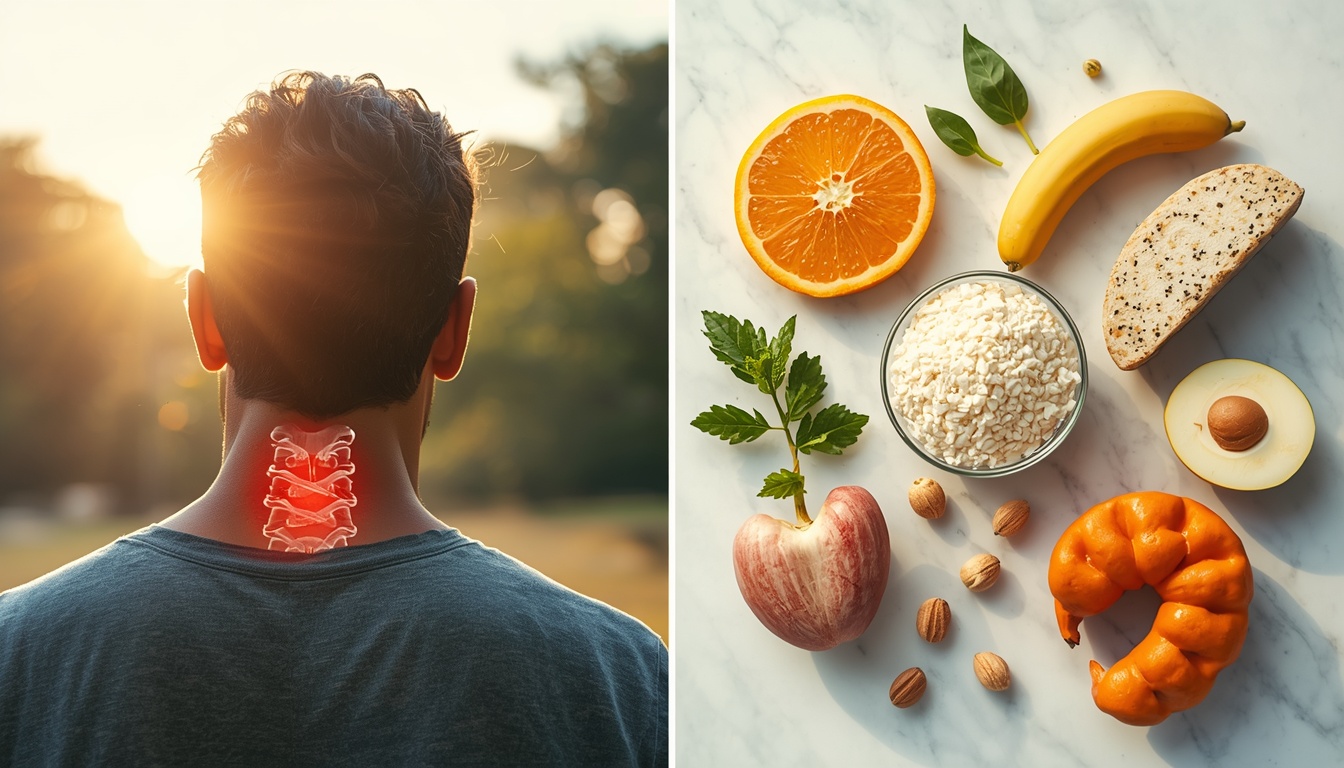
Four glands the size of a grain of rice sit on the back of your thyroid. Most people never hear their names until a blood test flags high calcium, a surgeon mentions them before a neck operation, or a dual-energy X-ray shows bone that has been quietly borrowed for years. Those glands — the parathyroids — do not make thyroid hormone. They make parathyroid hormone, PTH, and their entire job is to keep ionized calcium in a corridor so narrow that a few tenths of a millimole either way can change nerve firing, muscle contraction, and the way your heart resets between beats.
That corridor was not designed for a supermarket aisle of fortified milk, calcium gummies, and year-round shade. It was designed for a world in which dietary calcium arrived irregularly, vitamin D arrived with midday sun, phosphate arrived with meat and plants in roughly ancestral ratios, and the skeleton was a bank that expected withdrawals to be paid back by walking, carrying, and impact. The glands still run that old program. Modern life changed the deposits and the lighting. The set point did not get the memo.
What These Glands Actually Do
PTH is a peptide with a half-life measured in minutes. Chief cells in the parathyroid sense extracellular calcium through the calcium-sensing receptor, CaSR, a G-protein-coupled receptor that Edward Brown and colleagues cloned in the 1990s after earlier work had already shown that the gland responds directly to calcium, not only to a brain signal. When ionized calcium dips, CaSR quietens, PTH pours out within seconds, and three rescue routes open at once.
In bone, PTH recruits osteocytes and osteoclasts to release calcium and phosphate from the mineral matrix — the same matrix your skeleton still expects to load with impact, a theme explored in why your bones still expect impact. In kidney, PTH increases distal calcium reabsorption so you do not pour the rescue into the toilet, and it stimulates 1-alpha-hydroxylase so more 25-hydroxyvitamin D becomes 1,25-dihydroxyvitamin D, the active hormone that tells the gut to absorb the next meal’s calcium more greedily. In gut, that active vitamin D up-regulates calcium-transport proteins. The loop closes when blood calcium rises enough for CaSR to hush the gland again.
Fuller Albright, working at Massachusetts General Hospital in the mid-twentieth century, mapped much of this clinically: primary hyperparathyroidism, the bone disease of excess PTH, and the way the kidney and skeleton share the bill. John T. Potts and colleagues later sequenced and synthesized PTH fragments and showed that the first 34 amino acids carry most of the classic actions. Harald Rasmussen helped separate the rapid and slower effects on bone cells. None of that physiology assumes three glasses of fortified milk and a desk job.
The Ancestral Calcium Budget
Hunter-gatherer and early agricultural diets were not uniformly low in calcium, but they were irregular. Uncultivated greens, bones cracked for marrow, small fish eaten with the skeleton, and hard water in some regions supplied calcium in pulses. Phosphate arrived with meat, seeds, and tubers. Vitamin D was a solar product for most latitudes: skin 7-dehydrocholesterol converted under UVB, then 25-hydroxylated in the liver, then activated in the kidney under PTH and low phosphate. Michael Holick’s later work on cutaneous vitamin D synthesis simply quantified what outdoor lives already did without a label.
The parathyroid’s job in that world was insurance. A night without dairy was normal. A cloudy week dropped vitamin D production. A diarrheal illness or a pregnancy borrowed from bone. PTH rose, the kidney held calcium, the gut prepared to absorb the next available source, and osteocytes lent from cortical and trabecular stores that walking and load would later restock. Calcitonin from the thyroid C cells, identified in the 1960s by Douglas Copp and others, provided a modest opposite brake after a rare calcium-rich meal, more important in some other vertebrates than in adult humans.
What the system did not expect was a constant high-phosphate, low-walking, low-UV indoor day punctuated by isolated calcium pills that never arrive with the protein, acid-base, and mechanical signals bone uses to decide whether to keep the mineral.
What Changed — and What the Glands Still Do Anyway
Three modern shifts collide with the old set point.
First, vitamin D status. Indoor work, high-latitude winters, sunscreen used as a daily indoor habit rather than a beach tool, and darker skin living far from the equator all lower 25-hydroxyvitamin D. The kidney then cannot make enough 1,25-dihydroxyvitamin D unless PTH stays chronically a little high. That secondary hyperparathyroidism is common, quiet, and easy to miss if you only look at total calcium, which the glands are defending. The same indoor mismatch shows up in thyroid seasonality and iodine handling, discussed in why your thyroid still expects iodine and winter.
Second, phosphate and acid load. Soft drinks, processed meats, and additive phosphates raise the phosphate the kidney must excrete. PTH and fibroblast growth factor 23 (FGF23) from bone both push phosphate out. If the diet is also low in potassium-rich plants, the net acid load nudges more bone buffering. Eduardo Slatopolsky’s work on phosphate, PTH, and secondary hyperparathyroidism in kidney disease made the extreme version visible; milder versions exist in people with normal creatinine who live on packaged food.
Third, the skeleton’s loading schedule. PTH’s bone effect is not simply “dissolve bone.” Intermittent PTH, the pattern used therapeutically as teriparatide, can be anabolic. Continuous mild elevation, the pattern of chronic secondary hyperparathyroidism, leans catabolic, especially at cortical sites. A body that sits all day and then takes a calcium tablet at night is sending the gland a scarcity signal and the bone a stillness signal at the same time.
The glands also still expect the kidney to concentrate and hold what matters. When drinking patterns and solute loads change, calcium handling rides along with sodium and water — a quieter cousin of the story in why your kidneys still expect a drought.
When the Set Point Goes Off Script
Primary hyperparathyroidism is usually a single adenoma that ignores CaSR and keeps secreting PTH. Blood calcium runs high, PTH is inappropriately normal or high, and people may notice kidney stones, bone loss, fatigue, or nothing at all — the modern “asymptomatic” presentation Albright’s era saw less often because chemistry panels were rarer. Familial hypocalciuric hypercalcemia, from inherited CaSR variants, looks similar on paper but should not be operated on. Hungry-bone syndrome after a long-standing adenoma is removed, described in surgical series since Walter St. Goar’s era, shows how aggressively bone can suck calcium back once the drive stops.
Secondary hyperparathyroidism is the evolutionary-mismatch version: vitamin D insufficiency, chronic kidney disease, low calcium intake in the very old or the very restricted, or high phosphate. The glands are doing their job. The environment is not giving them the inputs they were calibrated for. Tertiary disease is what happens when secondary drive lasts long enough for the glands to become autonomous.
Hypoparathyroidism after thyroid or parathyroid surgery is the opposite failure: too little PTH, low calcium, high phosphate, tingling, tetany, and a QT interval that makes cardiologists sit forward. It is iatrogenic more often than evolutionary, but it proves how little slack the set point has.
Hidden Triggers in Ordinary Weeks
A month of strict indoor living in winter drops 25-hydroxyvitamin D and lets PTH creep up without a single dramatic symptom. A proton-pump inhibitor taken for reflux reduces gastric acid that helps ionize dietary calcium from some salts. A very low-calorie or very low-protein phase removes both calcium and the IGF-1 and loading signals bone uses. High-oxalate smoothies without dairy or calcium-rich greens bind calcium in the gut. Loop diuretics increase urinary calcium; thiazides decrease it — same mineral, opposite pharmacy. Lithium can raise PTH. A sudden jump into high-dose isolated calcium without vitamin D and without walking does not “fill the tank” the way a mixed ancestral meal plus daylight would have.
None of these is a moral failure. They are inputs the CaSR-PTH-vitamin D-bone loop was never asked to integrate at this combination and this duration.
Myths vs Facts
Myth: More calcium pills always mean stronger bones.
Fact: Calcium is necessary but not sufficient. Without vitamin D status, protein, and mechanical load, extra calcium may raise urine calcium and vascular debate without rebuilding architecture. Trials of calcium-plus-vitamin D are mixed; calcium alone is weaker.
Myth: A normal total calcium means the parathyroids are quiet.
Fact: Total calcium includes albumin-bound calcium. Ionized calcium and PTH together tell the truth. Mild secondary hyperparathyroidism can sit behind a “normal” calcium for years.
Myth: Dairy is the only ancestral calcium source.
Fact: Many traditional diets used bones, small fish, leafy plants, and hard water. Lactase persistence is a regional agricultural adaptation, not a species-wide requirement.
Myth: High PTH always means you need your glands removed.
Fact: First ask whether vitamin D, kidney function, calcium intake, and medications explain a secondary picture. Surgery is for primary disease that meets criteria, not for a gland doing its job in a dark office.
Myth: If you take vitamin D you can ignore the sun and the skeleton.
Fact: Supplemental vitamin D can correct a lab number. It does not replace impact loading or the rest of the mineral-hormone conversation.
How to Work With the Old Set Point
Give the glands a diet that looks like a meal, not a capsule. Calcium from food — dairy if you tolerate it, canned fish with bones, tofu set with calcium, leafy greens paired with a fat source — arrives with protein and matrix cues. If a supplement is needed, smaller doses with meals beat a single nightly bolus that spikes urine calcium.
Correct 25-hydroxyvitamin D into a sufficient range rather than a megadose weekend. Sensible midday skin exposure when latitude and season allow still matches the hormone the kidney expects to activate. Indoor-only winters at high latitude usually need a measured supplement, not guesswork.
Lower the unnecessary phosphate additive load if packaged food dominates, and raise potassium-rich plants so the kidney’s acid-base and mineral handling is not fighting a constant Western acid tide.
Load the bank you keep withdrawing from. Walking, carrying, hopping, and resistance work tell osteocytes that mineral is needed in bone, not only in blood. Intermittent PTH is anabolic in part because bone cells see a pulse against a background of use. Continuous mild PTH against a background of sitting is a different letter on the same stationery.
Do not chase “just in case” calcium if your diet is already adequate and your labs are calm. The CaSR is trying to hold a line, not to win a supplement contest.
When to See a Doctor
Ask for ionized or albumin-corrected calcium plus PTH if you have recurrent kidney stones, unexplained fracture or bone-density loss, persistent fatigue with constipation and polyuria, or a family history of high calcium. After any neck surgery, tingling around the mouth, cramps, or a sudden change in mood or heartbeat is a same-day question, not a wait-until-Monday curiosity. Very high calcium with confusion or vomiting is urgent. Do not start high-dose vitamin D or calcium on a guess if you already have high blood calcium — that is how silent primary hyperparathyroidism gets louder.
FAQs
Can you live without parathyroid glands?
Yes, but not without replacing their job. People with postsurgical hypoparathyroidism need carefully titrated calcium and active vitamin D (calcitriol), sometimes PTH analogs, and close follow-up. It is a full-time management problem because the minute-to-minute sensor is gone.
Does coffee or salt “steal” calcium?
Caffeine causes a small short-term rise in urinary calcium that habitual drinkers largely offset. High salt increases urinary calcium; that matters more in stone-formers than in everyone. Neither replaces the bigger levers of vitamin D, load, and total diet pattern.
Why do some people get high calcium after being in bed for weeks?
Unloading lets bone release mineral. Combined with dehydration and sometimes excess supplements, immobilized patients can become hypercalcemic. The glands may then suppress — appropriate, if the trigger is rest, not an adenoma.
Is a high-normal PTH with normal calcium a disease?
Not automatically. It can be early primary disease, vitamin D insufficiency, declining kidney function, or a lab moment. Repeat the pair, check 25-hydroxyvitamin D and creatinine, and interpret the trend rather than one isolated number.
Do men and women use this system differently?
The CaSR-PTH loop is shared. Estrogen loss at menopause unmasks bone remodeling that PTH and vitamin D then have to manage on a thinner margin, which is one reason fracture risk and primary hyperparathyroidism both show a female tilt after midlife.
Should children take extra calcium for “growing bones”?
Growing skeletons need calcium, protein, vitamin D, and actual play. Fortified food plus outdoor time usually beats megadose pills. Pediatric dosing belongs with a clinician if diet is severely restricted.
Conclusion
Your parathyroid glands are small, fast, and conservative. They were built to defend a precise calcium corridor in a world of irregular meals, real daylight, and a skeleton that earned its mineral back every day. They still release PTH when the corridor dips. They still ask the kidney to hold, the gut to absorb, and the bone to lend. What they cannot do is rewrite the set point because your office has no UVB, your dinner is phosphate-heavy, and your bones spent the day in a chair.
You do not need to recreate a Paleolithic pantry. You need to stop treating calcium as a single pill and start treating it as a conversation among sun, meal, kidney, and load. The rice-grain glands behind your thyroid have been having that conversation for as long as there have been vertebrates with bone. They are still waiting for the other parties to show up.