
Modern desk life keeps your ribcage still for hours. Your intercostal muscles evolved for the sideways expansion that comes with walking, carrying, and varied movement.
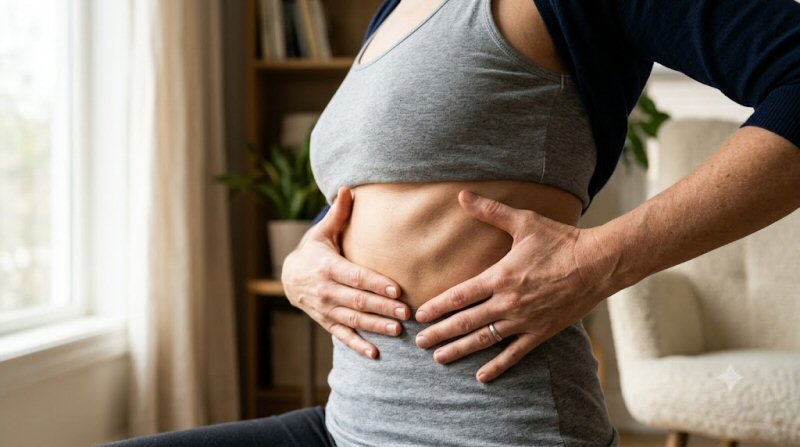
After a long afternoon at the desk, many people notice their breath feels small and high in the chest. The ribs barely move, and a full inhale seems to stop at the collarbones. That tightness is not just “stress.” It is a mismatch between the way your intercostal muscles were built to work and the way most modern days keep the ribcage almost motionless.
The intercostal muscles sit between the ribs. External intercostals help lift and expand the cage during inhalation. Internal intercostals assist in drawing the ribs down and in during forced exhalation. Together they allow the ribcage to widen sideways and slightly forward—the circumferential expansion that researchers such as André De Troyer have mapped in detail. In everyday life this expansion was rarely optional. Walking, carrying loads, climbing, or simply moving through uneven ground required the ribs to open and close with each stride. The muscles received constant low-level work and regular stretch.
What Restricted Sideways Expansion Feels Like
Most people describe a band of tightness around the mid-ribs, a sense that the breath cannot drop into the sides, or a mild ache between the shoulder blades after hours of sitting. Some notice they sigh more often or feel short of breath during ordinary conversation even though lung tests are normal. The ribcage itself may feel “locked,” especially on one side after leaning toward a screen.
These sensations are common and usually mechanical rather than medical. The external intercostals have spent the day in a shortened, quiet position while the upper chest and neck muscles take over. When you finally stand and try to breathe more fully, the sides of the ribs resist the motion they once performed automatically.
Why the Muscles Still Expect That Motion
Human breathing mechanics evolved under conditions of frequent locomotion. Studies of respiratory muscle activity, including work by Simon Gandevia and colleagues, show that the intercostals are recruited not only for quiet breathing but also to stabilize the trunk during arm and leg movement. A long stride or a carried load creates small rotational and lateral forces that the ribcage must accommodate. The external intercostals lengthen and shorten repeatedly, keeping the joints between the ribs mobile and the muscle fibers responsive.
Seated work removes those forces. The pelvis tilts, the thoracic spine rounds slightly, and the lower ribs are pressed against the diaphragm. Lateral expansion becomes mechanically harder, so the nervous system defaults to upper-chest breathing. Over days and weeks the intercostals receive less stretch and less neural drive. They do not “forget,” but they become less efficient at the sideways movement they were calibrated for. This is the same pattern seen in other under-used stabilizers: the muscle still expects the loading pattern of daily life, yet daily life no longer supplies it.
Related reading on the larger breathing pattern appears in Why Your Diaphragm Still Expects an Upright Breath and Why Your Rib Cage Still Expects Occasional Deep Breaths.
Common and Hidden Triggers
Poor seated posture is the most obvious trigger. Rounded shoulders and a forward head position flatten the upper ribs and limit the bucket-handle motion of the lower ribs. Prolonged keyboard use keeps the arms fixed in front of the body, reducing the small trunk rotations that normally accompany breathing. Anxiety or focused concentration often produces rapid, shallow breaths that further quiet the intercostals.
Less obvious factors include chronic mouth breathing, which bypasses the nasal resistance that normally encourages fuller rib expansion, and tight chest muscles from hours of driving or phone use. Even a supportive office chair can hold the lower ribs in a compressed position for so long that the first few steps after standing feel stiff. Cold indoor air and low humidity can add a mild protective tightening of the chest wall, though this is usually secondary.
When the Restriction Is Worth Checking
Most rib tightness after desk work eases with movement and does not signal disease. See a clinician if you notice sharp pain with every breath, pain that radiates into the arm or jaw, sudden shortness of breath at rest, swelling in one leg, or a cough that produces blood. Unexplained weight loss, night sweats, or a history of blood clots also warrant prompt evaluation. Persistent one-sided pain after a fall or heavy lift should be assessed to rule out rib or muscle injury. For the ordinary afternoon tightness that improves when you walk or stretch, the cause is almost always mechanical.
Myths Versus Facts
Myth: Deep breathing exercises alone will permanently fix a stiff ribcage.
Fact: Practice helps, but the muscles also need the varied loading that comes from walking, reaching, and occasional carrying. Isolated drills without daily movement produce only temporary change.
Myth: If you can take a big breath when you try, the intercostals are fine.
Fact: Many people can force expansion when they focus, yet default to minimal movement the rest of the day. The issue is frequency and automatic use, not maximum capacity.
Myth: Ribcage stiffness always means a serious lung or heart problem.
Fact: In the absence of red-flag symptoms, the far more common explanation is hours of reduced motion plus compensatory upper-chest breathing.
Practical Ways to Restore Sideways Expansion
Short, frequent breaks beat long corrective sessions. Every 45–60 minutes, stand and place your hands on the sides of your lower ribs. Inhale slowly through the nose and aim to feel the ribs push outward into your hands; exhale and let them settle. Ten breaths are enough. Gentle side bends—reaching one arm overhead while the opposite hand stays on the ribcage—restore the length the external intercostals have lost.
Walking remains one of the most effective resets. The natural arm swing and slight trunk rotation reintroduce the loading pattern the muscles expect. Carrying a light bag on one shoulder for a few minutes, then switching sides, adds a controlled challenge without strain. Avoid forcing large volumes of air; the goal is smooth lateral movement, not maximum inflation.
If you spend most of the day seated, raise the screen so you are not looking down, and let the shoulders rest rather than hunch. Nasal breathing during ordinary tasks gives the intercostals a more consistent signal. Over a few weeks most people notice the afternoon tightness appears later and resolves faster once they stand.
For more on how neck and shoulder position affect breathing, see Why Your Scalenes Still Expect a Walking Breath.
When to See a Doctor
Arrange a visit if the tightness is accompanied by chest pain, dizziness, irregular heartbeat, or breathlessness that limits ordinary walking. Also seek care if one side of the ribcage remains markedly restricted after several days of movement, or if you develop a fever with the discomfort. These steps rule out less common causes while the everyday mechanical pattern is addressed with posture and motion.
Frequently Asked Questions
Why do my ribs feel tighter on one side after computer work?
Most people lean slightly toward their dominant hand or screen. That small, sustained bend shortens the intercostals on one side and lengthens them on the other, so the first deep breaths after standing feel uneven.
Can tight intercostals cause shoulder or neck pain?
Yes. When the ribs move less, the scalenes and upper trapezius often work harder to lift the chest. The resulting tension commonly appears as neck or shoulder ache even though the original restriction is lower.
Is it normal for the sides of my ribs to feel sore after starting to breathe more deeply?
Mild, short-lived soreness is common when under-used muscle is asked to lengthen again. It should fade within a day or two. Sharp or worsening pain is not typical and should be checked.
Do I need special breathing devices or apps?
No. Hands-on feedback and ordinary walking supply the sensory information the nervous system uses to restore automatic expansion. Devices can be helpful for some people but are not required for the common desk-related pattern.
How long does it take to notice easier sideways breathing?
Many people feel a difference within a few days of adding short standing breaks and walks. Consistent change in automatic posture and breath usually appears over two to four weeks.
Conclusion
Your intercostal muscles are not designed for a ribcage that stays nearly still from morning until evening. They expect the small, repeated sideways expansions that once accompanied walking, carrying, and ordinary movement. Modern seated hours remove that input, so the muscles quiet down and the breath rises. Restoring even brief periods of lateral rib motion—through simple hand placement, side reaches, and walking—gives them the loading pattern they still recognize. The tightness that appears after a desk day is usually a reminder, not a warning, that the ribcage was built to move.


