The hypothalamus still reads day length as a calendar. Tanycytes, thyroid deiodinase, melatonin duration, and what Wehr, Hazlerigg, Lincoln, Hanon and Rosenthal mapped about a brain that never left the seasons.
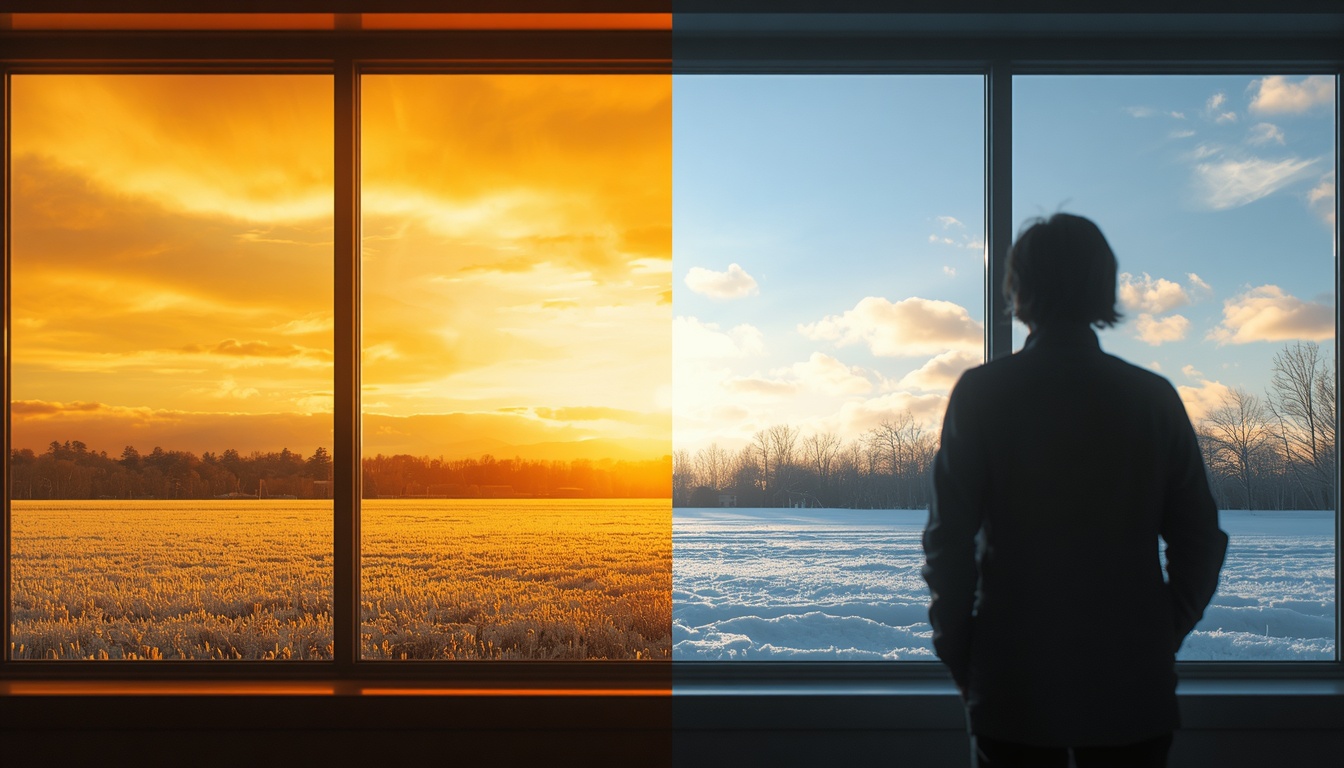
Your thermostat, appetite, sleep pressure, sex hormones and winter mood do not live in a single “mood center.” They live, in large part, in a small cluster of nuclei at the base of the brain that still treats the length of the day as a calendar. The hypothalamus was built for a world in which dawn crept earlier in spring, nights stretched in autumn, food and temperature followed those hours, and the body needed to change gears before the weather did.
Electric light, indoor heat and a grocery store that ignores solstice did not delete that calendar. They just stopped sending it a clean signal. The result is not always dramatic seasonal affective disorder. More often it is a quieter mismatch: sleep that will not deepen in winter, hunger that will not ease in long evenings, a thyroid axis that still listens for day length, and a mood dip that arrives when the sky goes gray and the living room stays bright.
What the hypothalamus is actually tracking
The hypothalamus sits under the thalamus, around the third ventricle, and weighs only a few grams. That is enough tissue to run thirst, temperature, hunger, blood pressure set points, the stress axis, reproduction and the daily clock. The master clock — the suprachiasmatic nucleus — lives here. So do the arcuate nucleus that reads leptin and ghrelin, the preoptic area that sets body temperature and sleep, and the paraventricular nucleus that talks to the pituitary.
Season is not a second clock glued on later. In mammals that breed or fatten by photoperiod, day length is encoded as the duration of the nightly melatonin signal. Josephine Arendt and Alfred Lewy showed that humans still make a longer melatonin night in winter than in summer when they live with real outdoor light and true darkness. Thomas Wehr, working at the National Institute of Mental Health, then demonstrated that when healthy adults are released into long, fully dark nights, sleep splits, melatonin stretches, prolactin and thyroid rhythms shift, and the body begins to look more seasonal than a 16-hour lit day allows.
The hypothalamus is reading that duration, not the label on the calendar.
The hidden thyroid switch in the brain
The most elegant seasonal circuit is not in the thyroid gland in the neck. It is in the wall of the third ventricle. Specialized glial cells called tanycytes line that wall and contact both cerebrospinal fluid and the blood at the median eminence. In seasonal mammals, long days increase tanycyte deiodinase type 2 (DIO2), which converts thyroxine (T4) into active triiodothyronine (T3) inside the hypothalamus. Short days raise deiodinase type 3 (DIO3), which inactivates thyroid hormone locally.
Francis J. P. Ebling, David Hazlerigg, Gerald Lincoln and Perry Barrett mapped this photoperiodic thyroid switch in sheep and hamsters. A later human-relevant twist came from work led by Hugues Dardente and from the DIO2/DIO3 story crystallized by Hanon and colleagues: the same enzyme logic sits in the mediobasal hypothalamus of many mammals. Local T3 then changes GnRH drive, energy expenditure and the willingness of the reproductive axis to run.
Humans are not sheep. We do not snap from fertile to infertile at a solstice. We do, however, keep tanycytes, deiodinases, a melatonin duration code and a pituitary that still listens. Winter TSH rises in population studies — a pattern also discussed in work on seasonal thyroid set points by researchers such as Peter Laurberg — even when the neck gland is healthy. The brain is still asking what season it is.
That is why a heated apartment in December can feel metabolically confusing. The skin is warm. The retina is seeing evening LEDs. The tanycytes are receiving a melatonin night that is neither a true long-night winter nor a true short-night summer.
How day length used to change the whole body
Before climate control, a shortening day was a briefing.
Melatonin nights lengthened. Sleep had room to become biphasic, as Wehr documented — a first sleep, a quiet wake, a second sleep — instead of one compressed block under a lamp. Appetite and fat storage received a different hypothalamic tone. Brown-fat and thyroid axes received a colder, darker morning. Reproductive hormones tracked energy and photoperiod together, which is one reason seasonality of conception still appears, weakly, in historical human data.
The hypothalamus did not need a weather app. It needed a reliable ratio of light hours to dark hours, a cool morning, and a night that was actually night. Those three cues arrived together for most of primate history.
Modern life separates them. You can have a 16-hour light day in December, a 22 °C bedroom, and a late meal that keeps liver and clock genes on a summer schedule. The nuclei that set hunger and sleep then receive mixed mail.
The modern signal is bright, short, and seasonless
Three substitutions do most of the damage.
Evening indoor light shortens the melatonin night. The pineal still expects darkness; the hypothalamus still expects to use that darkness as a ruler. A living room at 200–300 lux after sunset is not a campfire. It is a fake long day. This is the same circuit described in why the pineal still expects true darkness.
Daytime indoor light is too dim to declare summer. Outdoor daylight is tens of thousands of lux. An office is a few hundred. Melanopsin cells in the retina, and the SCN they feed, are under-stimulated at noon and over-stimulated at 9 p.m. The day-length contrast collapses. That collapse is cousin to the problem in why morning cortisol still expects dawn: the hypothalamus cannot time a season if it cannot time a day.
Climate control removes the temperature that used to travel with photoperiod. A short day once meant a cold morning. Brown adipose tissue and hypothalamic temperature neurons still expect that pairing. Without it, winter becomes a lighting problem instead of a whole-body seasonal program.
Norman Rosenthal and colleagues described winter depression when this mismatch is severe: low outdoor light, long indoor evenings, delayed circadian phase, and a mood-energy dip that lifts with bright morning light. Most people never meet diagnostic criteria for seasonal affective disorder. Many still feel a milder version of the same circuit running on a blurred calendar.
What this mismatch feels like
It rarely announces itself as “my hypothalamus is confused.” It feels like ordinary winter and ordinary city life.
Sleep gets later while the alarm stays early. Hunger leans toward evening starch when the sky goes dark at 5 p.m. Motivation thins in January even when work has not changed. Hands and mood feel colder than the thermostat says they should. Libido and cycle regularity can drift. A TSH at the upper end of “normal” appears on a winter blood test and then eases in June.
None of that proves disease. It is what a photoperiodic brain does when the photoperiod is fake.
Hidden triggers that flatten the seasons further
Shift work and social jet lag scramble the SCN so day length has no stable baseline to measure against.
Late screens after an already indoor day add a second long-day signal at the worst hour.
Year-round identical meal times and late protein-poor snacks keep liver clock genes from tracking the sky.
Vitamin D drop in high latitudes removes another seasonal cue the hypothalamus and pituitary have historically used, a theme that overlaps with why the thyroid still expects iodine and winter.
Always-warm bedrooms prevent the cool-night drop that helps both sleep and seasonal metabolism.
Travel across latitudes without changing light behavior — flying to a short-day city and living inside hotel LEDs — leaves tanycytes and the SCN with no coherent story.
When to take a winter slump seriously
See a clinician rather than blaming the solstice if low mood includes hopelessness, loss of pleasure, or any thought of self-harm; if winter sleep is extreme hypersomnia or total insomnia; if weight change is rapid; if cold intolerance, hair loss, constipation and a rising TSH suggest thyroid disease rather than a seasonal set-point nudge; or if “winter” symptoms persist through a bright spring.
Seasonal affective patterns respond to morning outdoor light or a properly timed light box for many people, as Rosenthal’s group and later chronobiologists showed. That is a treatment decision, not a DIY diagnosis. Bipolar spectrum illness can be destabilized by aggressive light timing. Get help before you buy a lamp and stare into it at midnight.
Myths vs facts
Myth: Humans have no seasons left; only sheep and hamsters do. Fact: Human melatonin duration, TSH, sleep structure and conception rates still move with photoperiod when light history is measured carefully. The amplitude is smaller. The circuit is not gone.
Myth: A sad winter mood is only psychology or vitamin D. Fact: Psychology and vitamin D matter. So does a hypothalamus that encodes night length. Light at the right hour is a biological input, not a pep talk.
Myth: More light at any hour is the cure. Fact: Morning outdoor light and evening darkness are not interchangeable. A bright 10 p.m. kitchen can lengthen the wrong end of the day.
Myth: Turning the heat up fixes a seasonal brain. Fact: Warmth without a dark night and a bright morning is only half the ancestral briefing.
Myth: If you do not have diagnosed SAD, day length is irrelevant. Fact: Most mismatch is subclinical: later sleep, flatter mornings, winter hunger, a TSH that breathes with latitude.
How to give the hypothalamus a readable year
You cannot move the Earth. You can restore contrast.
Get outdoor light within the first hour after you wake, even on gray days. Overcast daylight is still far brighter than a lamp. Ten to thirty minutes is a start; a walk is better.
Keep evenings dimmer and warmer in color after sunset. The goal is a longer melatonin night in winter, not a cave. This is how you let the ruler work.
Protect sleep timing as the season changes instead of sliding two hours later with the sofa. A stable sleep midpoint gives the SCN a reference.
Let the bedroom be cooler than the living room. A modest overnight drop is a seasonal cue the preoptic hypothalamus still understands.
Eat the last real meal early enough that night can be a fast. The liver and the mediobasal hypothalamus both keep time with food.
In high-latitude winter, treat morning light as hygiene, not luxury. If a clinician agrees a light box is appropriate, use it in the morning, not as late-night entertainment.
Do not chase a summer body composition program in the darkest six weeks if sleep and mood are already thin. The arcuate nucleus is allowed to be more conservative when nights are long.
When to see a doctor
Make an appointment if winter low mood is more than a preference for soup and early nights; if you need to evaluate TSH, free T4 and, when indicated, other pituitary hormones; if sleep phase has delayed so far that work and driving are unsafe; or if you are considering high-intensity light therapy and have a personal or family history of mania.
Bring a two-week log of sleep times, outdoor minutes and evening screen use. A hypothalamus story is easier to read when the light history is written down.
FAQs
Do humans really have a photoperiodic hypothalamus? Yes, with a smaller seasonal amplitude than classic short-day breeders. Melatonin duration, tanycyte deiodinases, TSH and sleep structure still respond to day length when studies control light exposure instead of assuming the wall calendar is the input.
Why do I feel hungrier when the sun sets at 5 p.m.? A sudden long evening in indoor light is a mixed signal: the sky says winter, the lamps say long day, and reward circuits meet food when the SCN is trying to wind down. Earlier outdoor light and an earlier last meal usually help more than another snack at 10 p.m.
Is winter TSH elevation always hypothyroidism? Not always. Population TSH drifts upward in winter in several studies. A clear rise with symptoms and a low free T4 is different from a small seasonal bump. That distinction belongs to a clinician and a repeat test, not a forum.
Will a tropical vacation reset my seasons? A week of real outdoor light and earlier darkness can shift melatonin timing. It will not rewrite tanycytes forever if you return to late LEDs. Think of travel light as a reminder, not a cure.
Does exercise replace daylight? Movement helps mood, sleep and insulin. It does not substitute for melanopsin input to the SCN. Walk outside and you get both.
Should children live by the same seasonal light rules? They need outdoor day even more, because their clocks are still being trained. Early-evening dimness and morning daylight are more useful than a perfect temperature.
Conclusion
The hypothalamus is a seasonal organ living in a seasonless apartment. It still measures the night with melatonin, still converts that measurement into local thyroid hormone through tanycytes, and still tries to set sleep, appetite and energy as if spring and winter were different worlds. They were. For the body, they still are — if you give the sky a chance to say so.
You do not need to move to a cabin. You need a brighter morning, a darker evening, a cooler night and a meal schedule that does not pretend every month is June. The calendar on the wall is optional. The one in the base of the brain is not.