Painkillers are among the most commonly used medicines worldwide. From headaches and back pain to fever, muscle aches, and joint discomfort, millions of people reach for relief every day without a second thought. Two names dominate medicine cabinets across the globe: paracetamol (also known as acetaminophen) and ibuprofen.
For many people, these drugs feel interchangeable. If one doesn’t work, they try the other. Some even take them daily for chronic pain conditions like arthritis or recurring headaches. But despite their widespread use, these medications are not the same—and when used frequently or long term, their safety profiles matter a great deal.
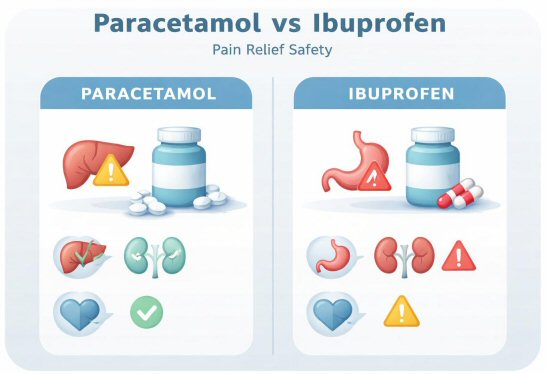
At betterhealthfacts.com, we believe that common medicines deserve uncommon clarity. This article takes a deep, medically accurate look at paracetamol vs ibuprofen, answering a crucial question: which painkiller is safer for daily use?
We will compare how each drug works in the body, how effective they are for different types of pain, and what risks they pose to the liver, kidneys, stomach, heart, and other organs. We will also cover dosage limits, overdose risks, drug interactions, and special warnings for vulnerable populations.
The goal is not to scare you—but to empower you with evidence-based information so you can make safer choices and know when to seek medical advice.
Understanding Paracetamol and Ibuprofen
Although paracetamol and ibuprofen are both classified as pain relievers, they belong to different drug categories and act in very different ways inside the body.
What Is Paracetamol?
Paracetamol, called acetaminophen in some countries, is an analgesic (pain reliever) and antipyretic (fever reducer). It has been used for over a century and is recommended by doctors for mild to moderate pain and fever.
Paracetamol is commonly used for:
- Headaches and migraines
- Tooth pain
- Muscle aches
- Fever due to infections
- Post-surgical or post-vaccination pain
Unlike many other painkillers, paracetamol is not classified as a nonsteroidal anti-inflammatory drug (NSAID). This distinction is important when considering safety and long-term use.
What Is Ibuprofen?
Ibuprofen is an NSAID. This class of drugs reduces pain, fever, and inflammation. Ibuprofen is commonly prescribed or used over the counter for conditions involving swelling or inflammatory pain.
Ibuprofen is often used for:
- Joint and arthritis pain
- Muscle injuries
- Menstrual cramps
- Dental pain with inflammation
- Sports injuries
Because ibuprofen reduces inflammation, it can be more effective than paracetamol for certain types of pain—but that benefit comes with additional risks.
How Paracetamol Works in the Body
Paracetamol’s exact mechanism of action is still not completely understood, even after decades of use. However, medical research has clarified several key aspects.
Paracetamol works primarily in the central nervous system (the brain and spinal cord). It inhibits the production of prostaglandins—chemical messengers involved in pain and fever—within the brain rather than at the site of injury.
This central action explains why paracetamol:
- Reduces pain perception
- Lowers fever
- Does not significantly reduce inflammation
Because it does not block prostaglandins in the stomach or kidneys to a large extent, paracetamol does not irritate the stomach lining or increase bleeding risk in the same way NSAIDs do.
Liver Metabolism of Paracetamol
Paracetamol is metabolized almost entirely by the liver. Most of the drug is safely processed and excreted. However, a small portion is converted into a toxic byproduct known as NAPQI.
Under normal dosing, the liver neutralizes NAPQI using glutathione, a protective antioxidant. When doses exceed safe limits—or when liver function is impaired—this toxic compound can accumulate and cause serious liver damage.
Doctors consistently warn that paracetamol overdose is one of the leading causes of acute liver failure worldwide, even though the drug is considered safe at recommended doses.
How Ibuprofen Works in the Body
Ibuprofen works by inhibiting cyclooxygenase enzymes (COX-1 and COX-2). These enzymes are responsible for producing prostaglandins throughout the body.
Prostaglandins play several roles:
- They signal pain and inflammation
- They protect the stomach lining
- They help regulate kidney blood flow
- They influence blood clotting
By blocking prostaglandin production both centrally and peripherally, ibuprofen reduces pain, fever, and inflammation—but also interferes with protective mechanisms in the stomach, kidneys, and cardiovascular system.
Kidney and Cardiovascular Effects
Ibuprofen reduces blood flow to the kidneys by inhibiting prostaglandins that maintain renal circulation. In healthy individuals using short-term doses, this effect is usually mild and reversible.
With prolonged or high-dose use, however, ibuprofen can:
- Impair kidney function
- Increase blood pressure
- Worsen heart failure
- Increase cardiovascular risk in susceptible individuals
Pain Relief Effectiveness: Which Works Better?
The effectiveness of paracetamol vs ibuprofen depends largely on the type of pain being treated.
Effectiveness of Paracetamol
Paracetamol is effective for mild to moderate pain and fever. It is often the first-line recommendation for:
- Tension headaches
- Fever
- Mild musculoskeletal pain
- Pain in people who cannot take NSAIDs
However, paracetamol is less effective for conditions involving significant inflammation, such as arthritis flare-ups or acute injuries.
Effectiveness of Ibuprofen
Ibuprofen tends to be more effective for inflammatory pain. Studies consistently show that NSAIDs outperform paracetamol for:
- Arthritis pain
- Menstrual cramps
- Dental pain with swelling
- Sports injuries
That said, greater effectiveness does not automatically mean greater safety—especially with daily use.
Anti-Inflammatory Properties Compared
This is one of the clearest differences between the two drugs.
Paracetamol has minimal anti-inflammatory action. It treats pain perception rather than the inflammatory process itself.
Ibuprofen directly reduces inflammation, which can improve mobility and swelling in conditions like arthritis.
For chronic inflammatory conditions, doctors may prefer NSAIDs—but often with strict monitoring and limited duration.
Gastrointestinal Safety: Stomach and Bleeding Risks
Paracetamol and the Stomach
Paracetamol does not significantly damage the stomach lining and does not increase the risk of gastrointestinal bleeding when used at recommended doses.
This makes it a safer option for:
- People with a history of stomach ulcers
- Individuals prone to acid reflux
- Elderly patients at risk of GI bleeding
Ibuprofen and Gastrointestinal Risk
Ibuprofen inhibits COX-1 enzymes that protect the stomach lining. With repeated or high-dose use, this can lead to:
- Stomach irritation
- Gastritis
- Ulcers
- Gastrointestinal bleeding
Medical guidelines consistently caution that chronic NSAID use is a major risk factor for upper gastrointestinal bleeding, especially in older adults.
Liver Safety and Toxicity Risks
Paracetamol and Liver Damage
Paracetamol is safe for the liver only within recommended dosage limits. Exceeding these limits—even unintentionally—can cause severe liver injury.
Risk factors for paracetamol-induced liver damage include:
- Taking more than the daily maximum dose
- Chronic alcohol use
- Pre-existing liver disease
- Using multiple combination products containing paracetamol
Unlike ibuprofen, paracetamol toxicity can occur without warning symptoms until damage is severe.
Ibuprofen and the Liver
Ibuprofen is much less likely to cause liver injury. Mild liver enzyme elevations can occur but are usually reversible.
Severe liver injury from ibuprofen is rare and typically associated with allergic reactions or idiosyncratic responses.
Kidney Safety and Long-Term Use
Paracetamol and Kidneys
At standard doses, paracetamol has minimal impact on kidney function. Long-term high-dose use, however, may still contribute to kidney damage over time.
For most people, paracetamol is considered safer for the kidneys than NSAIDs.
Ibuprofen and Kidney Risk
Ibuprofen can reduce kidney blood flow, particularly in:
- Older adults
- People with dehydration
- Patients with chronic kidney disease
- Those taking diuretics or blood pressure medications
Chronic daily use significantly increases the risk of NSAID-induced kidney injury.
Cardiovascular Risks
Paracetamol does not significantly increase the risk of heart attack or stroke when used appropriately.
Ibuprofen, like other NSAIDs, may increase cardiovascular risk, especially at higher doses or with long-term use.
Patients with existing heart disease or high blood pressure are often advised to limit NSAID use.
Recommended Dosage Limits
Paracetamol Dosage
For adults, the typical maximum daily dose is 3,000 to 4,000 mg depending on regional guidelines and individual risk factors.
Doctors often recommend lower limits for long-term use.
Ibuprofen Dosage
Over-the-counter ibuprofen is typically limited to 1,200 mg per day, while prescription doses may go up to 3,200 mg under medical supervision.
Daily high-dose use should only occur with medical monitoring.
Overdose Risks and Warning Signs
Paracetamol overdose can be silent initially but catastrophic later. Ibuprofen overdose often causes gastrointestinal and neurological symptoms early.
Any suspected overdose requires immediate medical attention.
Drug Interactions
Both drugs interact with other medications.
Paracetamol interacts with alcohol and certain liver-affecting drugs.
Ibuprofen interacts with blood thinners, steroids, blood pressure medications, and other NSAIDs.
Special Populations and Warnings
Elderly Adults
Paracetamol is generally preferred for daily pain management in older adults due to lower GI and kidney risk.
Liver Disease
Paracetamol may require strict dose reduction or avoidance. Medical supervision is essential.
Kidney Disease
Ibuprofen is often avoided. Paracetamol is usually safer at reduced doses.
Pregnancy
Paracetamol is generally considered the preferred pain reliever during pregnancy when used appropriately. NSAIDs are typically avoided, especially in later trimesters.
Which Painkiller Is Safer for Daily Use?
For most people, paracetamol is considered safer for daily or frequent use when taken within recommended limits.
Ibuprofen may be more effective for inflammatory pain but carries higher risks with long-term use.
Many doctors recommend paracetamol as the first-line option for chronic pain, reserving NSAIDs like ibuprofen for short-term or targeted use.
Balanced Conclusion
Paracetamol and ibuprofen are both effective, valuable medicines when used correctly. Neither is risk-free, and neither should be taken casually for long periods without medical advice.
Paracetamol offers a better safety profile for daily use in most people, particularly those at risk of stomach, kidney, or heart complications. Ibuprofen provides stronger anti-inflammatory relief but requires caution, especially with frequent use.
Chronic pain should never be managed indefinitely with over-the-counter medication alone. Persistent pain is a signal—not a nuisance—and deserves professional evaluation.
At betterhealthfacts.com, our mission is to turn everyday health questions into clear, trustworthy knowledge. When in doubt, consult a healthcare professional who can tailor pain management to your specific health needs.