Allergic rhinitis, seasonal allergies, and chronic hives affect millions of people worldwide. Sneezing, itchy eyes, nasal congestion, and skin rashes can significantly disrupt daily life. Among the most commonly prescribed antihistamines are levocetirizine and cetirizine. Both are classified as second-generation antihistamines and are widely used for relief from allergy symptoms. However, one important question frequently asked by patients is: Which causes more drowsiness — levocetirizine or cetirizine?
At betterhealthfacts.com, we focus on medically accurate and research-backed health information. This in-depth guide compares levocetirizine and cetirizine in terms of mechanism of action, classification, effectiveness, side effects, sedative potential, and practical considerations such as dosage and safety in special populations.
Understanding Allergies and the Role of Histamine
When a person with allergies encounters a trigger such as pollen, dust mites, or pet dander, their immune system overreacts. Specialized immune cells release histamine, a chemical mediator that binds to histamine H1 receptors in various tissues.
Histamine binding causes:
- Vasodilation and increased blood vessel permeability (leading to swelling and redness)
- Stimulation of nerve endings (causing itching)
- Increased mucus production
- Smooth muscle contraction in airways
Antihistamines work by blocking H1 receptors, thereby reducing allergy symptoms.
Antihistamine Classification: First vs Second Generation
Antihistamines are broadly divided into two categories:
First-Generation Antihistamines
Examples include diphenhydramine and chlorpheniramine. These drugs cross the blood-brain barrier easily and frequently cause sedation, impaired alertness, and anticholinergic side effects such as dry mouth and urinary retention.
Second-Generation Antihistamines
Levocetirizine and cetirizine belong to this group. These medications were developed to reduce central nervous system penetration and minimize drowsiness. They are considered “non-sedating” or “less sedating” compared to first-generation antihistamines, though mild drowsiness can still occur.
What Is Cetirizine?
Cetirizine is a second-generation H1 receptor antagonist widely used to treat:
- Seasonal allergic rhinitis
- Perennial allergic rhinitis
- Chronic spontaneous urticaria
It is typically prescribed at a dose of 10 mg once daily in adults.
Cetirizine is effective, fast-acting (usually within one hour), and generally well tolerated. However, compared to some other second-generation antihistamines such as loratadine, it has a slightly higher tendency to cause drowsiness.
What Is Levocetirizine?
Levocetirizine is the active enantiomer of cetirizine. Cetirizine is a racemic mixture containing two mirror-image forms (R and S enantiomers). Levocetirizine consists only of the R-enantiomer, which is responsible for most of the antihistamine activity.
By isolating the active enantiomer, levocetirizine was developed with the aim of improving efficacy and possibly reducing side effects.
The standard adult dose of levocetirizine is 5 mg once daily, which is pharmacologically comparable to 10 mg of cetirizine.
Mechanism of Action: Are They Different?
Both medications:
- Selectively block peripheral H1 receptors
- Reduce histamine-mediated allergic symptoms
- Have minimal anticholinergic activity
Levocetirizine has a higher affinity for the H1 receptor compared to cetirizine. This means it binds more tightly to the receptor, potentially allowing effective symptom control at a lower dose.
However, clinically, both drugs demonstrate comparable effectiveness in most patients.
Effectiveness in Allergic Rhinitis
Multiple clinical trials have shown that both cetirizine and levocetirizine significantly reduce:
- Sneezing
- Nasal itching
- Rhinorrhea (runny nose)
- Ocular symptoms
Head-to-head comparisons generally show similar overall efficacy. Some studies suggest levocetirizine may provide slightly longer duration of symptom relief in certain individuals, but the difference is not dramatic.
Second-generation antihistamines are considered first-line therapy for allergic rhinitis due to their effectiveness and improved safety profile compared to older agents.
Effectiveness in Chronic Urticaria (Hives)
Both medications are approved for chronic spontaneous urticaria. They help reduce:
- Wheal formation
- Itching intensity
- Frequency of flare-ups
Clinical guidelines often list both drugs as acceptable options. In resistant cases, higher doses under medical supervision may be used.
Drowsiness: The Central Question
Although classified as second-generation antihistamines, both cetirizine and levocetirizine can cause drowsiness in some individuals.
Drowsiness Rates in Clinical Studies
Clinical trial data indicate:
- Cetirizine: drowsiness reported in approximately 10–14% of adults
- Levocetirizine: drowsiness reported in approximately 6–10% of adults
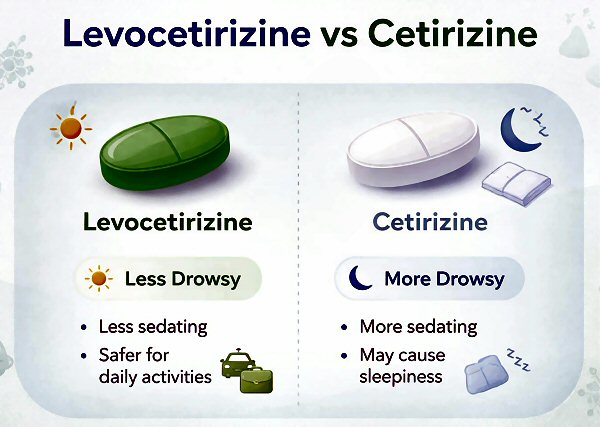
These rates vary depending on the study population and dosage. Overall, levocetirizine appears to have a slightly lower incidence of sedation compared to cetirizine, but the difference is modest.
Importantly, both drugs cause significantly less sedation than first-generation antihistamines.
Why Does Drowsiness Occur?
Even though second-generation antihistamines are less likely to cross the blood-brain barrier, small amounts can still enter the central nervous system. Blocking central H1 receptors may lead to:
- Sleepiness
- Reduced alertness
- Slower reaction times
Individual sensitivity plays a major role. Some people experience no drowsiness, while others may feel noticeable fatigue.
Impact on Alertness and Driving Safety
Driving simulation studies have examined the cognitive and psychomotor effects of antihistamines.
Cetirizine at 10 mg has been shown in some studies to cause mild impairment in psychomotor performance compared to placebo, though significantly less than older antihistamines.
Levocetirizine at 5 mg generally shows minimal impairment in standardized tests, though mild sedation may still occur in susceptible individuals.
Patients should be advised to assess their individual response to any antihistamine before driving or operating heavy machinery.
Even if classified as “non-drowsy,” neither medication guarantees complete absence of sedation.
Workplace Performance Considerations
For individuals in safety-sensitive occupations (drivers, machine operators, healthcare professionals), even mild sedation can affect performance.
Evidence suggests levocetirizine may have a slightly lower impact on cognitive performance compared to cetirizine, but differences are small. Patients concerned about alertness may consider starting medication during a non-working day to monitor effects.
Other Side Effects Comparison
Common Side Effects of Cetirizine
- Drowsiness
- Dry mouth
- Fatigue
- Headache
- Pharyngitis
Common Side Effects of Levocetirizine
- Somnolence
- Fatigue
- Dry mouth
- Headache
Overall side effect profiles are very similar. Serious adverse effects are rare.
Dosage and Timing: Morning vs Night
Cetirizine
Typical adult dose: 10 mg once daily.
Levocetirizine
Typical adult dose: 5 mg once daily.
If drowsiness occurs, taking the medication in the evening may reduce daytime sleepiness. However, some individuals prefer morning dosing if they do not experience sedation.
Use in Children
Both medications are approved for pediatric use with weight-appropriate dosing.
Children may experience paradoxical excitation or mild sedation. Pediatric dosing must follow physician guidance.
Use in Elderly Patients
Older adults may be more sensitive to central nervous system effects. Though safer than first-generation antihistamines, caution is still advised.
Lower starting doses may be appropriate in frail elderly patients.
Kidney Disease Precautions
Both cetirizine and levocetirizine are primarily eliminated through the kidneys.
In patients with reduced kidney function:
- Dosage adjustments are required
- Drug accumulation may increase risk of sedation
Patients with moderate to severe renal impairment should consult a physician before use.
Is Levocetirizine Truly “Less Drowsy”?
Because levocetirizine is the active R-enantiomer of cetirizine, it binds more selectively to H1 receptors and is given at half the dose (5 mg vs 10 mg).
Clinical data suggest slightly lower rates of reported somnolence. However:
- The difference is modest
- Individual variability is high
- Neither drug is completely non-sedating
Therefore, while levocetirizine may cause slightly less drowsiness on average, it cannot be considered entirely free from sedative effects.
Which Is Better for Patients Sensitive to Sedation?
If a patient has previously experienced drowsiness with cetirizine, switching to levocetirizine may reduce symptoms in some cases.
However, if sedation persists, a different second-generation antihistamine with lower brain penetration may be considered under medical advice.
Practical Advice for Choosing Between Them
- Both are effective for allergic rhinitis and urticaria.
- Levocetirizine may have slightly lower drowsiness rates.
- Cost and availability may differ by region.
- Individual response is the most important factor.
Final Verdict: Which Causes More Drowsiness?
Based on available clinical evidence:
Cetirizine is slightly more likely to cause drowsiness compared to levocetirizine.
However, the difference is small, and both medications are significantly less sedating than older antihistamines.
The safest choice depends on:
- Individual sensitivity
- Occupation and daily activity level
- Kidney function
- Medical supervision
At betterhealthfacts.com, we encourage patients to consult their healthcare provider before starting or switching allergy medications, especially if they drive regularly, operate machinery, or have underlying health conditions.
In conclusion, levocetirizine may offer a slight advantage in terms of reduced drowsiness, but both medications remain safe, effective, and widely used second-generation antihistamines when taken as directed. Careful monitoring of personal response remains the most reliable way to determine which allergy tablet is the better choice for you.