
Neck soreness after looking up at a high monitor is common. Here is why sustained upward gaze tires the neck muscles and simple ways to ease it.
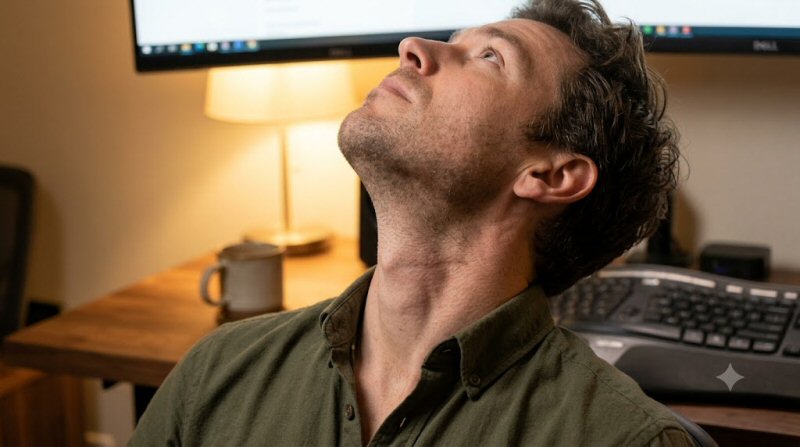
You finish a long stretch of work, stand up, and notice a dull ache across the back of your neck or a tight band running from the base of your skull toward your shoulders. The monitor sits a little higher than eye level, and you have been tilting your head back for hours to see the top of the screen. This pattern is extremely common in office and home setups.
Yes, it is normal for your neck to feel sore after looking up at a high monitor for an extended period. The muscles that hold the head in extension are not designed for prolonged static upward gaze. They fatigue, tighten, and sometimes refer pain into the upper shoulders or base of the skull. Most of the time the discomfort fades once you change position and give the tissues a chance to recover.
What This Soreness Usually Feels Like
People describe a stiff, heavy, or aching sensation at the back of the neck, often worse on one side. Some notice tightness when they turn their head or look down after the session. The area just under the skull can feel tender, and the upper shoulders may feel knotted. The soreness typically builds gradually rather than appearing as a sharp stab, and it eases with gentle movement or a short walk.
Common Everyday Causes
The most frequent trigger is a monitor placed above eye level. Laptop screens, high external monitors, or dual-screen setups where one screen sits higher all encourage cervical extension. Looking up at a wall-mounted TV, reading something posted high on a wall, or even holding a phone above eye level for video calls can produce the same load.
Poor overall posture compounds the issue. When the lower back rounds and the shoulders drift forward, the neck must extend even more to keep the gaze on the screen. Long uninterrupted sessions without standing or turning the head allow fatigue to set in. Stress can add to the picture by increasing baseline muscle tension in the same region.
Why the Neck Muscles Fatigue So Easily
The head weighs roughly 10–12 pounds. In neutral alignment the load is shared efficiently across the cervical spine and the supporting muscles. When you tilt the head back, the upper trapezius, levator scapulae, and small suboccipital muscles must work harder to hold that position against gravity. Research on cervical muscle endurance, including work by Gwendolen Jull and colleagues, shows that these muscles have limited capacity for sustained low-level contraction before fatigue and discomfort appear.
Nikolai Bogduk’s anatomical studies of the neck highlight how the suboccipital muscles and the joints at the top of the cervical spine are particularly sensitive to prolonged extension. The tissues accumulate metabolites, blood flow can be mildly reduced during static holds, and local receptors begin to signal discomfort. This is the same reason your arms tire if you hold them overhead for a long time—only the neck is doing it while you sit.
In everyday life the neck expects frequent small changes of direction, not a fixed upward angle. Hours of looking up therefore create a mismatch between the demand and the muscles’ design for varied, intermittent use.
Less Common but Worth Noting
Occasionally the same posture can irritate a cervical facet joint or contribute to a tension-type headache that starts at the base of the skull. If you already have mild degenerative changes in the neck, sustained extension may make those joints feel stiffer. These are still usually mechanical rather than serious, but they respond best when the aggravating posture is corrected early.
Hidden Triggers That Make It Worse
Glasses that are not quite right for the screen distance can force extra head tilt. A chair that is too low relative to the desk, or a laptop used without a riser, pushes the eyes and therefore the head upward. Cold air from a vent blowing on the neck can increase muscle guarding. Dehydration and skipped meals sometimes lower the threshold for muscle fatigue as well.
Sleep position the night before matters too. If you already woke with a stiff neck from a soft pillow or awkward angle, the same muscles have less reserve for the day’s upward gaze. Related patterns appear in pieces on neck stiffness after a soft pillow and the broader expectation that the neck prefers a level horizon rather than constant extension.
When to Pay Closer Attention
Most monitor-related neck soreness is benign and improves within a day or two of better positioning and movement. Seek professional advice if the pain is severe, radiates down one arm, or is accompanied by numbness, weakness, or tingling in the hand. Sudden headache with neck stiffness, fever, or pain after a fall or accident also warrants prompt evaluation. Persistent soreness that does not ease with simple changes after a week or two is another reason to have the neck checked.
Myths vs Facts
Myth: Any neck ache means you have “text neck” or permanent damage.
Fact: Temporary muscle fatigue from a high monitor is common and reversible. The tissues recover when the sustained load is removed.
Myth: You should never look up.
Fact: Occasional upward gaze is normal and healthy. The problem is hours of fixed extension without relief.
Myth: Stretching alone fixes it.
Fact: Stretching helps, but changing the monitor height and adding short movement breaks address the root cause more effectively.
How to Ease and Prevent the Soreness
Lower the top of the monitor so it sits at or slightly below eye level when you sit upright. If you use a laptop, place it on a stand or stack of books and add an external keyboard. This single change often eliminates most of the upward tilt.
Every 30–45 minutes, look away, gently turn your head side to side, and let your shoulders drop. A short walk or standing stretch resets the muscles. Gentle chin tucks—drawing the head straight back while keeping the eyes level—can ease the upper neck without forcing more extension.
Check that your chair supports an upright pelvis so the neck does not have to compensate for a slumped lower back. Soft, even lighting reduces the tendency to crane forward or upward to see clearly. If stress is high, a few slow breaths with the shoulders relaxed can lower overall muscle tone in the area.
These adjustments align with the idea that the neck still prefers a roughly level gaze for most of the day, a theme explored in discussions of why the neck expects a horizon.
When to See a Doctor or Physical Therapist
If the soreness keeps returning despite better monitor height and regular breaks, a physical therapist can assess muscle endurance, joint mobility, and workstation setup. They can also rule out other contributors such as mild facet irritation or referred pain from the upper back. Imaging is rarely needed for straightforward postural neck ache, but a clinician can decide if further checks are useful.
Frequently Asked Questions
How long does the soreness usually last?
Most people feel better within a few hours to a day once they lower the screen and move more. Lingering tightness can take two or three days if the muscles were quite fatigued.
Is it worse if I already have a stiff neck from sleep?
Yes. Overnight stiffness leaves the same muscles with less endurance, so a high monitor session feels more uncomfortable. Addressing both the pillow setup and the screen height helps.
Can this cause headaches?
It can. Sustained extension often contributes to tension-type headaches that start at the base of the skull and move forward. Improving posture and taking breaks usually reduces them.
Should I use a neck brace or collar?
No. Soft collars are not recommended for ordinary postural soreness; they can weaken the supporting muscles further. Movement and better positioning are more effective.
Does screen brightness or font size matter?
Indirectly. If the text is hard to read, you may lean or tilt more. Comfortable brightness and a readable font size reduce the need to crane the neck.
Will strengthening exercises help?
Yes, once the acute soreness settles. Simple endurance work for the deep neck flexors and upper-back muscles, guided by a therapist if needed, improves tolerance for desk work.
Conclusion
Feeling a sore neck after looking up at a high monitor is a normal response to sustained extension. The upper trapezius, levator scapulae, and suboccipital muscles simply tire when asked to hold the head tilted back for hours. Lowering the screen to eye level, adding short movement breaks, and keeping the rest of the posture upright usually resolve the ache quickly. Most cases stay mild and mechanical; only persistent pain with arm symptoms or other red flags needs professional review. Small setup changes protect the neck for the long stretches of screen time modern work requires.


