
A single neck crack on a turn is usually facet cavitation after stillness, not a disc slipping. Grinding with pain, trauma, or arm weakness is the different story.
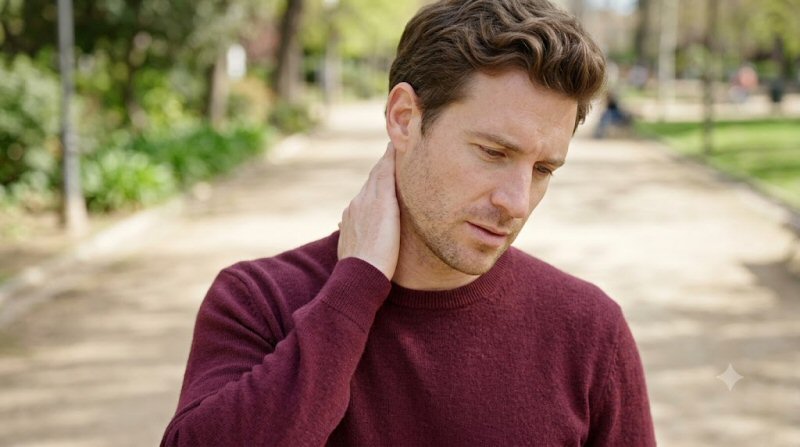
You glance over a shoulder to check a lane, or you look up from a laptop after an hour of a fixed screen, and the neck answers with a clean pop. Sometimes it is one click. Sometimes it is a short string of rice-crisp sounds as the head finishes the turn. It can feel oddly satisfying, or it can feel like something just shifted that should not have. Both reactions are common. A painless crack on an ordinary turn is usually a small joint releasing gas after stillness, not a vertebra slipping out of place.
That distinction matters, because the sound is easy to over-read. Necks are built to turn, look up, and glance while the rest of the body walks. Modern days park the head facing a screen, then ask for a quick rotation at a traffic light. The first real turn of the hour is exactly when a quiet facet joint is most likely to cavitate. The crack is a report of that pause, not proof of damage. Pain, a crack after a fall, or a new weakness in the arm is a different report.
What This Neck Crack Feels Like
People describe three versions, and they are not the same event. The first is a single, sharp pop on one side as the chin approaches the shoulder, often after sitting. It may happen once, then refuse to happen again for a while, the way a knuckle will not recrack immediately. The second is a softer grating or sand-like creak through the middle of the turn, more noticeable in the morning or in cooler weather. The third is a click that repeats every time the head rotates, sometimes with a small tug near the shoulder blade.
The single pop is the one most people mean by “cracking.” It is usually painless, or it comes with a brief sense of looseness rather than an ache. The grating version is crepitus, a rougher sound from joint surfaces or soft tissue gliding, and it can exist for years without getting worse. A click tied to a specific angle, especially if it pinches, is more often a tendon or a joint capsule catching than a bubble collapsing.
None of these sounds, by themselves, locate a disc. A cervical disc problem more often announces itself with arm pain, pins and needles in a clear nerve path, or weakness, not with an audible pop on a casual glance. Nikolai Bogduk’s anatomical work on the cervical facet joints separated those joints from the disc as a source of local neck ache. The sound and the ache do not have to travel together.
Why a Turn Makes the Sound
The neck has paired facet joints at each level, small synovial joints that guide rotation and side bending. Synovial fluid holds dissolved gas. When the joint surfaces separate a little faster than fluid can flow in, pressure drops and a gas cavity forms. That cavity is the pop. Anthony Unsworth, Duncan Dowson, and Verna Wright described this cavitation in cracking joints in 1971. Gregory Kawchuk and colleagues later filmed a finger joint in real time and showed a gas cavity appearing at the moment of the crack, which settled the old argument about whether the bubble was forming or collapsing.
The same physics fits a neck facet after a long hold. Sitting with the head slightly flexed keeps some joints compressed and others barely moving. A turn suddenly gaps a facet. One pop, then a refractory period while the gas redissolves, is the expected pattern. It is the same family of sound as a painless knuckle crack, moved up into smaller joints that also have synovial fluid.
Grinding is a different mechanism. Uneven cartilage, a thickened fold of synovium, or a tendon sliding over a bony corner can rasp without a gas bubble. That rasp is more common with age, with prior sprain, and with a neck that spends the day in one posture. It is not automatically arthritis that needs a scan. Many people with clear crepitus have unremarkable imaging, and many people with worn facets are quiet.
Common Reasons It Shows Up Now
Stillness is the usual trigger. A commute, a spreadsheet, a phone held in the lap, then a shoulder check. The joints have not been taken through range, so the first honest rotation cavitates. Cold air can make the same turn feel stiffer and noisier, because fluid is thicker and muscles guarding the neck are tighter. A night spent with the head turned into a pillow often produces a morning series of clicks that fade after a shower and a walk.
Screen flexion adds a second reason. A head that lives forward loads the lower neck and leaves the upper joints under-rotated. When you finally look over a shoulder, the upper facets and the muscles that steer them are asking for a motion they have not practiced. The horizon the neck still expects is a moving one, not a fixed glow at chest height. The crack is a side effect of reclaiming that turn, not a sign the horizon itself is harmful.
Habit can train the sound. People who deliberately twist until something pops often find the neck wants the same twist later. The relief is real for a minute, because a cavitating joint briefly changes local pressure and muscle tone. The want comes back because the posture that tightened the joint never changed. Forcing the end of rotation to chase the pop is the part that irritates facets and, rarely, strains vessels. The incidental crack on a normal glance is not that habit.
Less Common but Serious Causes
A crack at the moment of injury is not the office pop. Whiplash, a fall, or a sports hit can sprain facets, strain muscles, or, uncommonly, injure a disc or ligament. Pain that arrives with the sound, and stays, belongs in that category until a clinician says otherwise. Fever, unexplained weight loss, or a neck that is stiff in every direction raises infection and inflammatory disease, which are uncommon but not diagnosed by sound.
Arm symptoms change the reading. Numbness, tingling, or weakness in a strip down the arm, especially if grip fades or a shoulder shrugs poorly, can mean a nerve root is involved. The crack may be incidental. The nerve signs are not. Trouble walking, clumsiness in the hands, or electric sensations when the chin tucks toward the chest need prompt assessment for cord irritation, not a stretching routine.
Forceful self-cracking has a separate, rare risk. The vertebral arteries thread through the neck and can be injured by extreme rotation, particularly in people who already have a dissection starting. David Cassidy, Pierre Côté, and colleagues, and earlier work associated with Scott Haldeman, examined the fraught link between neck manipulation and stroke. The absolute risk is small, and many of those events may begin before the twist, but sudden severe headache, spinning dizziness, visual change, slurred speech, or a drooping face after a hard crack is an emergency. A quiet pop while checking a blind spot is not that event.
Hidden Triggers
Jaw clenching often rides along. The muscles that close the jaw and the muscles that brace the upper neck share a busy neighborhood. A day of teeth together can make the first turn click and ache at once. So can a shoulder held up toward the ear on the phone side. The levator and upper trapezius guard, the facet sits compressed, and rotation finishes with a pop.
One-sided carrying does it too. A heavy bag on the same shoulder, every commute, tips the neck into a small side bend for hours. The return to neutral, or a glance the other way, is when the joint speaks. Dehydration is a weaker suspect than people think. Synovial fluid does not crack because a glass of water was skipped. Prolonged stillness explains more of the weekday pattern than fluid intake.
New exercise can uncover it. A first swim, a long drive to a trail, or overhead work after months of a desk may produce a week of noisy turns that settle as the joints remember range. That adaptation crack is different from a crack that starts after a collision and worsens.
When to Worry
Worry less about the sound and more about what arrives with it. A single painless pop, a repeatable click without pinch, or a sandy creak that has been there for years and does not limit turning is usually mechanical noise. It does not predict arthritis in the way cracking knuckles was once said to.
Get the neck checked if the crack comes with sharp pain that lingers, if turning is clearly blocked on one side after an injury, if arm pain or weakness is new, or if you have fever and a rigid neck. Seek urgent care for a sudden severe headache, new trouble speaking or seeing, face or arm weakness, or spinning dizziness after a forceful twist. Those are vascular and neurologic warnings, not facet trivia. A grind that is slowly stealing range, night pain that does not care about position, or a history of cancer also deserves a clinician rather than another week of hoping the pop means it is loose enough.
Myths vs Facts
Myth: A crack means a bone is out of place.
Fact: Facet joints do not “go out” and then pop back during a shoulder check. The usual pop is gas in synovial fluid. A true instability is uncommon and shows up as injury, neurologic signs, or a structural problem a clinician can test, not as a satisfying click.
Myth: Cracking the neck causes arthritis.
Fact: Knuckle research, including the long observation associated with Donald Unger and the cavitation work of Unsworth, did not show ordinary cracking as a cause of arthritis. Habitual end-range forcing can irritate joints. Incidental noise on a normal turn has no such record.
Myth: If it cracks, you should crack it on purpose so it stays loose.
Fact: The refractory period means the same joint will not cavitate again immediately. Chasing the sound with a hard twist trains a habit and adds strain. Gentle movement through the day removes the reason for the pop more reliably than forcing it.
Myth: Grinding always means the discs are worn out.
Fact: Crepitus and disc wear overlap poorly. Imaging findings in the neck are common in people with no pain. The useful questions are range, strength, and nerve symptoms, not the volume of the turn.
How to Manage the Noise
Give the neck the small turns it missed. A few times an hour, look to each side as if checking a lane, then slightly up toward a far window, without pushing into a pinch. That is ordinary range, not a manipulation. Pair it with a shoulder-blade slide back and down so the neck is not doing the whole job of holding the head over a keyboard. A shoulder that pops on a raise is a cousin problem: nearby joints that have been still, then asked for a quick glide.
Set the screen so the horizon of your gaze is closer to eye level. The lower the laptop, the more the lower neck flexes and the upper joints wait. A short walk resets more than a deep stretch held at the end of rotation. If morning clicks are the pattern, a warm shower and easy nods before the first shoulder check are enough for most people.
Skip the assisted crack. Hands laced behind the head, a sudden twist to “get it,” or letting a friend twist the neck are the versions that occasionally injure. If a click pinches at one angle, stay just short of that angle for a few days and move in the ranges that are smooth. Ice or a brief warm pack can calm a sore side after an awkward sleep. Neither is required for a painless pop.
When to See a Doctor
See a clinician if pain, blocked motion, or arm symptoms last more than a week or two, or sooner if they follow a fall or a collision. Mention any forceful crack followed by headache or dizziness, even if it faded. People with osteoporosis, rheumatoid disease, or a history of neck surgery should not treat new cracking as ordinary until someone who knows that history has a look.
Most office visits for this complaint end with reassurance and a plan for motion, not a scan. Imaging is more useful when nerve signs, trauma, or red-flag illness are in the story. A physical therapist can separate a facet that simply cavitates from a movement pattern that keeps compressing the same side.
FAQs
Is it bad if my neck cracks every time I turn it? A repeatable, painless click is usually a tendon glide or a joint that cavitates at the same angle. It is annoying more often than it is harmful. Pain, a catch that blocks the turn, or arm symptoms are the reasons to get it examined.
Why does it crack more after sitting? Stillness lets a facet sit compressed. The first real rotation gaps the joint surfaces and forms a gas cavity. After you have been looking around for a while, the same turn is often quiet.
Can I crack my own neck to relieve stiffness? A gentle turn through normal range is fine. A hard end-range twist to force a pop is the habit to drop. Relief is brief, and extreme rotation is the rare setting linked with vessel injury.
Does a sandy grinding sound mean arthritis? It can reflect rougher joint surfaces, but grinding alone does not diagnose arthritis or predict pain. Many older necks grate and function well. Progressive stiffness, night pain, or nerve symptoms matter more than the sound.
Should I worry about a stroke if my neck cracks? An ordinary pop while looking over a shoulder is not a stroke warning. Sudden severe headache, visual change, trouble speaking, face droop, or spinning dizziness after a forceful twist needs emergency care. That pattern is uncommon and is about vessels and the brain, not about gas in a facet.
Will strengthening stop the crack? Strength does not silence cavitation on command. A neck and shoulder girdle that share the work, and a day that includes real head turns, usually make the urgent, end-range pop less necessary. Some people stay slightly noisy and do well.
Conclusion
A neck that cracks when you turn it is, most of the time, reporting a joint that sat still and then moved. Facet cavitation, a tendon glide, or a bit of crepitus can all sound dramatic and mean little. The neck still expects glances, shoulder checks, and a horizon that changes. Give it those ordinary turns without forcing the pop. Save the worry for pain that stays, a crack after injury, arm weakness, or neurologic symptoms that do not belong to a quiet weekday click.


