
Lower back ache after a day of repeated bending and lifting is common. Learn why flexed postures raise disc pressure and fatigue the muscles, when it is harmless, and simple ways to ease it.
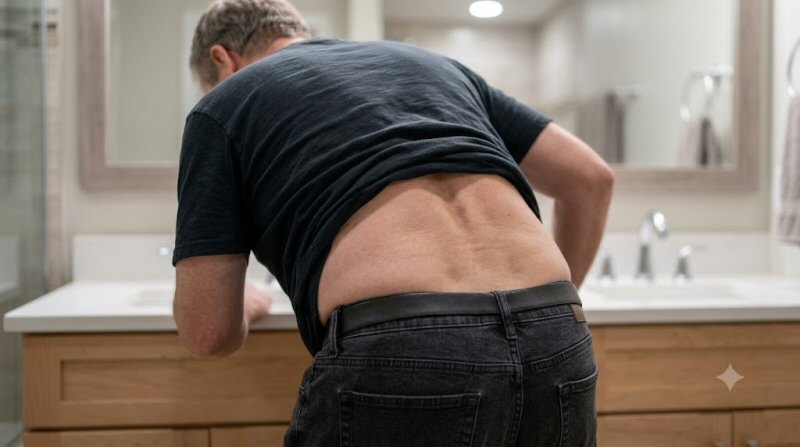
You spent the morning loading the dishwasher, then the afternoon sorting laundry and picking up toys or packages. By evening the area just above your hips feels tight, dull, or sore when you stand up straight or sit down. It is one of the most ordinary aches of modern household and workplace life, and for most people it settles with a little rest and movement.
What This Symptom Feels Like
The ache usually sits across the lower back or slightly to one side. It can feel like a deep muscle fatigue, a stiffness that makes standing fully upright take a moment, or a mild burning when you lean forward again. Some people notice it more after they finally stop and sit or lie down. It rarely starts with a sharp “twinge” if the day was just ordinary bending; more often it builds gradually.
Common Causes
Repeated lumbar flexion (bending forward at the waist) while holding even modest loads is the main everyday driver. Household tasks, gardening, packing, childcare, and many jobs keep the spine in a flexed position for long stretches. The paraspinal muscles and the deeper stabilizers work continuously; when they fatigue, the passive tissues (ligaments and discs) take more of the load. Overnight the discs rehydrate, so early-morning bending can feel stiffer until the spine has moved for a while.
Related everyday patterns appear in articles such as why your lower back still expects you to hinge and walk and lower-back ache after standing still.
Why This Happens
Classic pressure measurements by Alf Nachemson showed that forward leaning and lifting raise intradiscal pressure well above the level of quiet standing. When that posture is held or repeated, two further effects appear. Stuart McGill’s work on the lumbar spine documented “creep”: prolonged full flexion temporarily lengthens the supporting ligaments and reduces their stiffness, so the spine is briefly more mobile and less protected when the next load arrives. Under repeated flexion plus modest load the collagen layers of the disc can also show cumulative micro-damage over time, even without a single dramatic injury. The result is the familiar end-of-day ache rather than an acute tear.
Muscles that stay shortened or under low-level tension all day also develop local fatigue and mild metabolic buildup. When you finally stand upright or sit, the sudden change in demand makes the soreness noticeable.
Less Common but Serious Causes
True disc herniation, significant facet joint irritation, or sacroiliac strain can produce similar aches, but they usually add clearer signs: pain that radiates past the knee, numbness or weakness in the leg or foot, or pain that worsens sharply with coughing or sneezing. Systemic issues (infection, inflammatory arthritis, or, rarely, more serious spinal conditions) are uncommon in otherwise healthy adults who simply spent the day bending.
Hidden Triggers
A soft mattress or couch that lets the lower back round for hours can leave the same tissues already lengthened before the day of chores begins. Tight hamstrings or limited hip mobility force the lumbar spine to flex more than it needs to when you reach for something low. Dehydration and skipped meals reduce muscle endurance. Carrying loads on one side only, or twisting while bent, adds shear that pure forward bending does not.
When to Worry
Seek medical advice if the ache is accompanied by:
- Leg pain, numbness, or weakness that travels below the knee
- Changes in bowel or bladder control
- Fever, unexplained weight loss, or night pain that wakes you
- Pain after a fall, accident, or sudden heavy lift
- Symptoms that steadily worsen over days instead of easing with ordinary rest and gentle movement
For the ordinary end-of-day variety, those red flags are absent.
Myths vs Facts
Myth: Any back ache after bending means you have damaged a disc.
Fact: Most end-of-day aches are muscle and ligament fatigue plus temporary creep; they resolve without imaging or intervention.
Myth: You must keep the back perfectly straight at all times.
Fact: The spine is built to flex; the issue is cumulative high-load or end-range flexion without recovery. Occasional unloaded bending (as in a gentle cat-camel movement) is often helpful.
Myth: Resting completely is the fastest way to recover.
Fact: Gentle walking and short periods of upright posture usually restore comfort faster than prolonged immobility.
How to Manage It
After a day of bending, a short walk on level ground lets the muscles re-engage and the ligaments begin to regain stiffness. Brief reverse movements—lying on your stomach for a minute or two if it feels comfortable, or standing tall and gently arching—counter the flexed posture. Avoid the next round of deep forward reaching until the ache has eased. When you do need to pick something up, use a hip hinge (push the hips back, keep a relatively neutral spine) rather than rounding fully at the waist. Heat or a warm shower can relax the surface muscles; ice is rarely necessary for this gradual ache.
Breaking long bending tasks into shorter bouts with upright breaks reduces the creep effect McGill described. Strengthening the glutes and core over weeks improves load-sharing so the lumbar tissues are not working alone.
When to See a Doctor
If the ache continues at a bothersome level for more than a week despite ordinary activity modification, or if any of the red-flag symptoms appear, a clinician can rule out less common causes and guide further care. Most people never need that step for the typical “I bent over all day” pattern.
FAQs
Is it worse if I bend first thing in the morning?
Yes for many people. Discs are more hydrated after overnight rest, so early flexion creates higher internal pressure. Waiting a short while and walking first often makes the same tasks feel easier.
Should I avoid bending completely until the ache is gone?
No. Complete avoidance can prolong stiffness. Gentle, unloaded movement and walking are usually better than strict rest.
Can a lumbar support belt help on chore days?
Some people find temporary relief from the reminder to stay more upright, but belts do not strengthen the tissues and are not a long-term substitute for better movement habits.
Why does the ache sometimes appear only after I sit down in the evening?
Sitting often rounds the lower back again and reduces muscle activity. The contrast with the day’s flexed work makes the accumulated fatigue more obvious.
Does this mean I am “out of shape”?
Not necessarily. Even fit people notice the ache after unusually long or repetitive flexion. Consistent everyday movement and occasional hip-hinge practice reduce how often it appears.
Conclusion
An ache in the lower back after a full day of bending and lifting is a normal response of discs, ligaments, and muscles to repeated flexion under modest load. Classic pressure studies and later biomechanical work explain why the tissues feel different by evening and why a little upright time and walking usually restore comfort. Paying attention to how you hinge, inserting short breaks, and keeping the surrounding muscles capable turn an ordinary household ache into something that appears less often and fades more quickly.


