
Knees that ache after a long walk on concrete or pavement are common. Learn why hard surfaces load the joint more, the usual benign reasons, and when the discomfort is worth checking.
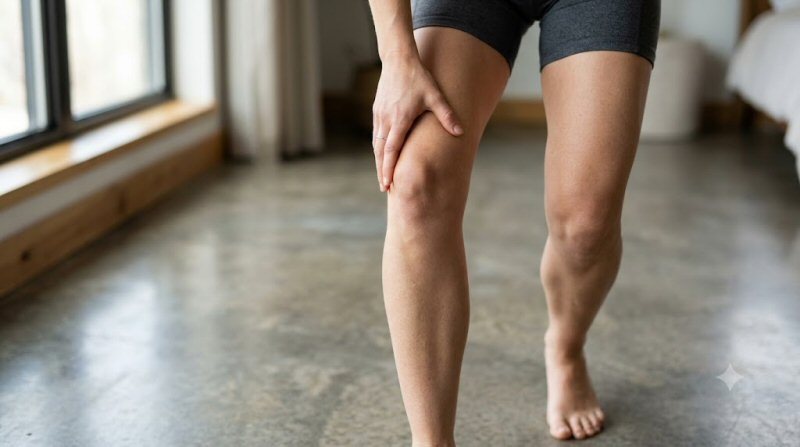
You finish a long walk on sidewalks or city streets and notice a dull ache settling into one or both knees. It eases after you sit down or take your shoes off, yet the next time you cover the same hard ground the feeling returns. Many people assume the concrete itself is damaging their joints. In most cases the ache is simply the result of repeated impact meeting muscles and cartilage that are not quite prepared for it.
What This Sensation Usually Feels Like
The discomfort is often a deep, dull ache around the front or sides of the knee, sometimes behind the kneecap or along the joint line. It builds gradually rather than striking suddenly. Some people also feel stiffness when they stand after sitting, or a sense that the knee is “tired.” Swelling is usually mild or absent if the cause is simple load. The ache tends to settle with rest, a short stretch, or a change of surface.
Common Causes
Concrete and pavement return almost all of the force that hits them. With each step the ground reaction force travels up through the foot, ankle, and into the knee. When you walk on grass or a dirt path, the surface compresses slightly and absorbs some of that energy. On concrete the energy keeps going.
If the muscles that normally help control the knee—especially the quadriceps, glutes, and calves—are a little under-conditioned, more of the load reaches the joint surfaces and the soft tissues around them. Mild irritation of the cartilage or the lining of the joint can then produce the ache. Footwear with worn cushioning or a flat, thin sole makes the same problem worse. Extra body weight multiplies the force on every step, so the same walk feels harder on the knees.
People who sit for most of the day and then walk long distances on hard ground often notice the pattern most clearly. Their supporting muscles have not had much recent demand, and the sudden increase in repetitive loading exceeds current capacity. This is different from an injury; it is more like asking a muscle to work longer than it is used to.
Why This Happens
Human knees evolved for varied terrain—soft earth, sand, hills, and occasional rock. Those surfaces change the angle and the amount of force with every step, and they give the foot a chance to sink slightly. Modern cities replace that variety with continuous hard, flat pavement. The knee still receives the same peak forces it always has, but without the small variations and the modest cushioning that softer ground provides.
Laboratory and clinical observations show that ground reaction forces on concrete are higher than on grass or tracks. Over thousands of steps the cumulative load can fatigue the muscles that stabilize the kneecap and the joint itself. When those muscles tire, the kneecap may track a little less smoothly, or the joint surfaces may experience slightly more pressure. The result is the familiar end-of-walk ache. Related patterns appear in other joints that also expect more variety; see, for example, why your knees still expect varied terrain.
Walking itself remains one of the best things you can do for joint health. The issue is rarely the walking; it is the combination of hard surface, duration, footwear, and current muscle endurance.
Less Common but Serious Causes
Persistent or worsening knee pain can come from osteoarthritis, especially if there is already some cartilage thinning. Meniscal irritation, patellofemoral pain syndrome, or early inflammatory joint conditions can also flare on hard surfaces. Nerve irritation from the lower back can occasionally refer into the knee, though that usually includes other symptoms such as tingling or weakness farther down the leg. These possibilities are less common when the ache is mild, appears only after long walks on concrete, and settles quickly with rest.
Hidden Triggers
Several everyday factors quietly raise the load on the knee:
- Shoes that have lost their midsole cushioning (often after 300–500 miles).
- Walking with a slight limp or favoring one side after an old ankle or hip issue.
- Tight hip flexors or weak glutes that change how force travels through the leg.
- Carrying a heavy bag or backpack that shifts weight forward.
- Sudden increases in daily steps after a period of low activity.
Cold weather can make the same walk feel stiffer because synovial fluid becomes slightly more viscous, but the main driver on concrete remains the impact.
When to Worry
Most post-walk knee aches are not urgent. Seek a professional evaluation if you notice:
- Pain that is sharp, catching, or locking the knee.
- Noticeable swelling that does not settle overnight.
- Pain that wakes you at night or is present even at rest.
- Giving way, instability, or a sudden inability to put weight on the leg.
- Pain accompanied by fever, redness, or warmth around the joint.
- Symptoms that steadily worsen over weeks despite rest and better shoes.
Pain that travels below the knee with numbness or weakness also deserves prompt attention, because it may involve a nerve root.
Myths vs Facts
Myth: Walking on concrete will ruin your knees.
Fact: Hard surfaces increase impact, but they do not automatically damage healthy joints. Muscle strength, footwear, and gradual progression matter far more.
Myth: If your knees ache you should stop walking.
Fact: Complete rest often makes supporting muscles weaker. Modified walking on softer ground, with better shoes, usually helps more.
Myth: Only runners get concrete-related knee pain.
Fact: Everyday walkers, retail workers, and anyone who covers long distances on pavement can feel the same load.
How to Manage It
Small changes usually reduce the ache:
- Rotate surfaces. Walk on grass, dirt paths, or a treadmill for part of the distance. Even a grassy shoulder beside the sidewalk helps.
- Replace shoes when the cushioning flattens. Look for models with good midsole shock absorption if you walk mostly on pavement.
- Add a brief warm-up—easy marching or gentle knee bends—before longer walks.
- Strengthen the muscles that unload the knee: simple wall sits, straight-leg raises, and glute bridges a few times a week.
- Shift your weight or take short sitting breaks on very long walks. A low step or curb to rest one foot can ease continuous loading.
- After the walk, a few minutes of gentle stretching for the calves and quads, plus elevating the legs if they feel heavy, often speeds recovery.
These steps also support the calf and foot systems that share the load; related guidance appears in articles on why your calves still expect hills and stairs and why feet ache after standing all day.
When to See a Doctor
See a clinician if the ache lasts more than a couple of weeks despite the changes above, if swelling appears, or if you have any of the red-flag symptoms listed earlier. A physical examination can distinguish simple overload from issues that benefit from specific treatment. Imaging is rarely needed at the first visit when the story is a clear load-related ache.
Frequently Asked Questions
Is it normal for only one knee to ache after walking on concrete?
Yes. Slight differences in leg length, old injuries, or how you load each side can make one knee complain first. The management steps remain the same.
Will better insoles fix the problem?
Cushioned or supportive insoles can reduce impact by a modest amount and are worth trying, especially if your shoes are already worn. They work best alongside stronger leg muscles and occasional softer surfaces.
Should I avoid concrete completely?
No. Most people do well by mixing surfaces and keeping walks within their current capacity. Completely avoiding hard ground is rarely necessary or practical.
Does this mean I have early arthritis?
Not necessarily. Many people with perfectly healthy cartilage feel an ache after long walks on hard surfaces when their muscles are not yet conditioned for that load. Persistent pain with swelling or stiffness lasting more than 30 minutes in the morning is more suggestive of joint changes and is worth checking.
How long should I rest if my knees ache?
A day or two of lighter activity is usually enough. Then return to walking on a softer surface or for a shorter distance and build back gradually.
Conclusion
An ache in the knees after walking on concrete is a common response to repeated impact on a surface that offers almost no give. In most people it reflects temporary muscle fatigue and joint loading rather than damage. Better shoes, mixed surfaces, and simple strengthening usually settle the discomfort. If the pain becomes sharp, swollen, or steadily worse, a professional check can rule out less common causes and keep you moving comfortably.


